
How Often Do Bearded Dragons Lay Eggs? (Age, Frequency & Infertile Eggs Explained)
If your bearded dragon has started digging or seems restless, you might be wondering if she’s about to lay eggs. This is a common question for owners who are experiencing it for the first time.
As a long-time owner of multiple bearded dragons, I’ve guided many through this process. I’ll share my hands-on experience to help you provide the best care.
We will explore the specific age egg-laying begins, the typical frequency of clutches, and how to handle infertile eggs safely.
When Do Bearded Dragons Start Laying Eggs?
Most female bearded dragons reach sexual maturity and are capable of laying eggs between 10 months and 1.5 years of age. I’ve found that a dragon’s size is often a better indicator than her age; they typically need to be at least 350-400 grams to support the physical demands of egg production. A well-fed, healthy dragon in a proper setup will mature faster than one with subpar care. That maturation window leads into the bearded dragon pregnancy-egg-laying timeline. After mating, a female may become gravid, with eggs typically laid within several weeks—though timing depends on temperature, light, and other husbandry factors.
Signs of Readiness for Egg Laying
Your dragon will give you clear physical and behavioral signals that she’s preparing to lay a clutch. I always tell new owners to watch for these specific changes.
- Noticeable Weight Gain and Swollen Belly: Her abdomen will become visibly larger and feel firm, almost like a bag of marbles.
- Intense Digging Behavior: She will frantically scratch at the corners of her enclosure. This is her instinct to create a burrow for her eggs.
- Decreased Appetite: As her body is crowded with eggs, she will often stop eating entirely. This is normal but can be worrying to see.
- Restlessness and Glass Surfing: She may pace the front of the tank repeatedly, seeming anxious to find the perfect laying spot.
When my dragon, Saffron, was gravid for the first time, the frantic digging at 2 AM was my biggest clue. Recognizing these signs early allows you to provide a lay box and prevent a dangerous condition called egg-binding.
How Frequently Do Bearded Dragons Lay Eggs?
The laying frequency depends entirely on whether the eggs are fertile or infertile. This is a crucial distinction that affects their health and your schedule.
- Infertile Eggs (Without a Male): A female can lay multiple clutches from a single mating, but she can also lay infertile eggs without ever seeing a male! It’s a common myth that a female needs a mate to produce eggs; they can do it spontaneously, much like chickens. They may lay 1-3 clutches in a season, usually during the spring and summer months.
- Fertile Eggs (After Mating): After a successful mating, a female will lay her first clutch in about 4-6 weeks. She can then store sperm and produce several more fertile clutches from that one mating, typically laying a new clutch every 4-6 weeks until she has exhausted the stored sperm. This can result in 3-5 clutches in a single breeding season.
The table below breaks down the typical timelines:
| Egg Type | Typical Clutches Per Season | Time Between Clutches |
|---|---|---|
| Infertile | 1 – 3 | Varies; often seasonal |
| Fertile | 3 – 5 | 4 – 6 weeks |
Typical Clutch Sizes and Variations
The number of eggs per clutch can be surprisingly high and varies wildly from dragon to dragon. First-time mothers often lay smaller clutches, while older, more experienced females can produce staggering numbers. These eggs can be fertile or infertile, depending on whether the female has mated. Distinguishing fertile from infertile eggs is important for incubation decisions.
- A typical clutch size ranges from 15 to 30 eggs.
- I’ve had a healthy adult dragon lay a clutch of 35 eggs, which is on the higher end but not unheard of.
- Smaller or younger dragons might only lay 12-15 eggs in their first clutch.
- Some giants of the species have been known to lay clutches of 50 or more eggs, though this is exceptionally rare and demanding on the mother.
Be prepared for this range. Seeing a large clutch for the first time can be a shock, but it’s a testament to your good care that she is healthy enough to produce them. Just remember that each egg-laying event is nutritionally draining, so proper post-clutch care is non-negotiable.
Understanding Infertile Eggs in Bearded Dragons

Finding a clutch of eggs in your female beardie’s enclosure can be a real surprise, especially if she lives alone. These are infertile eggs, and it’s a completely normal biological process for many mature females. Infertile egg laying, or folliculogenesis, is a natural part of their reproductive cycle and doesn’t require a male to trigger it. Many people wonder if female bearded dragons have periods. In reality, they don’t menstruate like humans; instead, their reproductive anatomy undergoes folliculogenesis and ovulation, which can lead to infertile egg laying even without a mate. I’ve had several solo females over the years who have presented me with these surprise packages.
Reasons for Infertile Egg Laying
Your girl isn’t broken; she’s just following her instincts. Several factors can kick her reproductive system into gear.
- Sexual Maturity: The primary reason is simply reaching reproductive age, which typically happens between 8 and 18 months.
- Photoperiod and Season: Longer daylight hours in the spring and summer often signal to her body that it’s the ideal time for breeding and egg production.
- Resource Abundance: Consistent access to plentiful food, proper heat, and a feeling of overall security can convince her body that conditions are perfect for reproducing.
- Hormonal Fluctuations: Just like other animals, their hormone levels can shift naturally, initiating an egg-laying cycle even without external cues.
The Egg Laying Process and Behaviors
Watching a gravid (egg-carrying) dragon is fascinating. Her behavior will change noticeably as she gets closer to laying.
- You’ll see a significant swelling in her abdomen that feels firm.
- She will likely become very restless, pacing the glass or scratching at the corners of her tank.
- A dramatic decrease in appetite is extremely common in the days leading up to the event.
- She will spend a lot of time digging, testing different spots in her enclosure to find the perfect place to lay her eggs.
Creating a Nesting Environment
This is the single most important thing you can do to ensure a smooth egg-laying process. A proper lay box prevents egg binding, a dangerous condition where she can’t pass the eggs.
- Find a large, sturdy container that she can fully enter, like a plastic storage bin.
- Fill it with a deep substrate, about 8-12 inches, that holds its shape when tunneled into. I have had the best success with a damp mix of play sand and organic topsoil.
- The substrate must be moist enough to clump together without dripping water. This provides the structural integrity she needs to dig a stable burrow.
- Place the box in her warm enclosure and let her explore it. She might not use it immediately, but she’ll know it’s there when she’s ready.
Caring for a Gravid Bearded Dragon
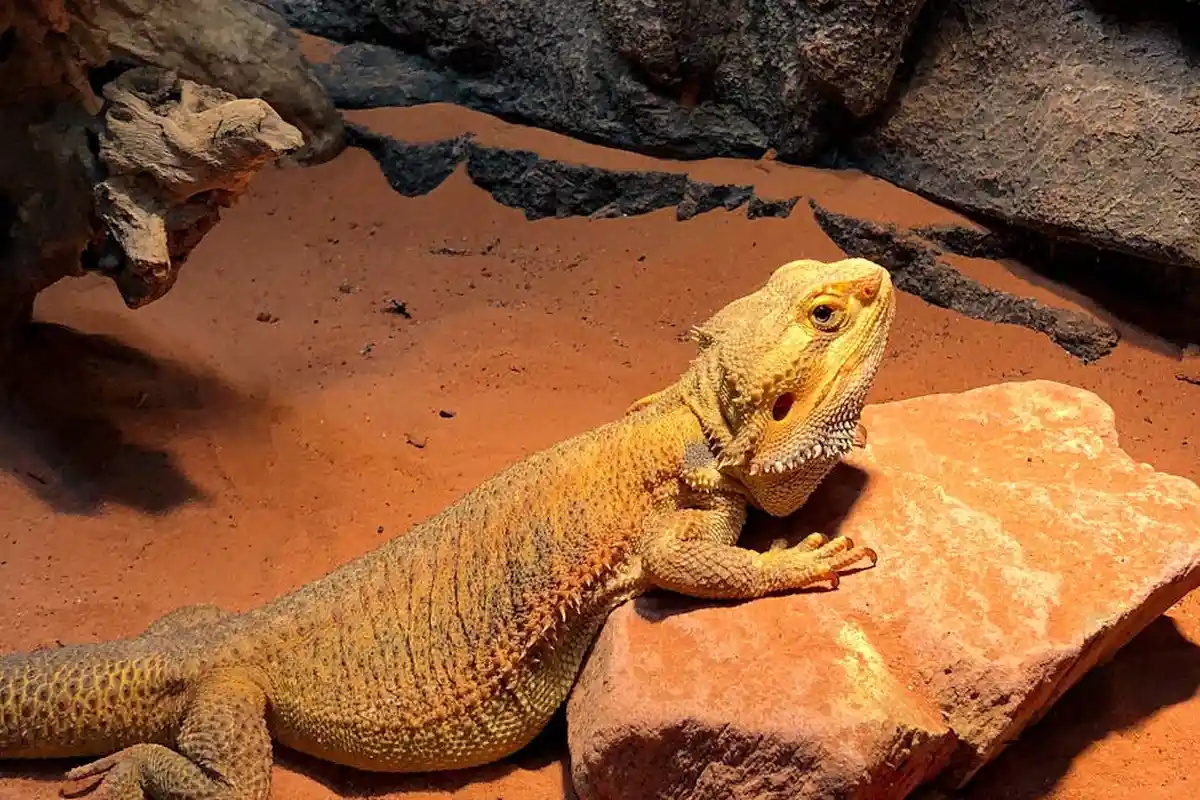
Producing and laying eggs is incredibly taxing on your dragon’s body. She needs extra support from you during this time. A daily feeding guide can help you tailor meals for babies, juveniles, and adults, ensuring she gets the right nutrition at every life stage.
Nutritional Needs During Egg Production
Her body is using a massive amount of calcium to form those eggshells. If she doesn’t get enough, she’ll start pulling it from her own bones, which can lead to metabolic bone disease.
- Offer her more frequent, highly nutritious feeder insects like dubia roaches and black soldier fly larvae.
- You must dust every single insect feeding with a high-quality calcium powder that contains no phosphorus. I even lightly dust her salads during this period.
- Ensure she has access to a shallow dish of fresh water at all times and consider offering water-rich veggies like bell peppers and zucchini.
Monitoring Health and Hydration
Keep a close eye on her throughout the entire process. Her well-being is the top priority.
- Weigh her regularly. A sudden weight loss after laying is normal, but you want to ensure she starts regaining it afterward with proper feeding.
- Offer daily warm baths. This helps with hydration and can encourage muscle contractions to assist with laying.
- Watch for warning signs of egg binding: lethargy, weakness, keeping her eyes closed, and straining without producing eggs. If you suspect egg binding, a veterinarian visit is an immediate necessity.
- After she lays her eggs, she will be exhausted and very hungry. Offer her a hearty, calcium-rich meal to help her recover.
Health Concerns: Egg Binding and Prevention
One of the most serious health issues a female bearded dragon can face is egg binding, where she is unable to pass her eggs. This is a life-threatening emergency that requires immediate veterinary attention. Vomiting in bearded dragons is a red flag that should prompt a veterinary visit. It can indicate dehydration, infection, parasites, or other GI problems that require professional assessment. I’ve had a scare with this myself, and the frantic worry is something I never want another owner to experience.
Preventative Measures for Healthy Laying
Prevention is always better than emergency treatment. Creating the right environment and diet is your best defense.
- Provide a dedicated lay box filled with moist, diggable substrate like clean topsoil or play sand.
- Ensure your dragon has access to extra calcium during her gravid period. I always keep a cuttlebone in the tank for her to chew on.
- Maintain perfect habitat temperatures to support her metabolism and muscle function.
- Offer plenty of hydration, both through drinking and warm soaks.
A well-prepared lay box is non-negotiable; it gives her the private, secure space she instinctively needs to lay her eggs safely. Watch for signs of distress like lethargy, frantic digging with no results, or a loss of appetite.
Handling Eggs Post-Laying

Once your dragon has finished laying and has carefully buried her clutch, your job begins. Your first step is to carefully excavate the eggs. To tell if the eggs are fertile, you’ll later candle them to look for embryos or veining. Fertile eggs show developing structures, while infertile ones often stay pale or chalky.
Handle the eggs as little as possible and avoid rotating or shaking them, as this can damage the embryo if they are fertile. I use a soft-bristled paintbrush to gently brush away the substrate, which feels much safer than using my fingers.
What to Do with Infertile Eggs
Most eggs from a solo female will be infertile. You have a couple of simple options.
- Dispose of them in your compost or trash.
- Some owners, including myself, will offer them back to the female as a nutritional snack, as they are rich in calcium. She will usually eat them eagerly.
This may seem strange, but it’s a natural behavior that helps her recover vital nutrients lost during the taxing egg-laying process.
What to Do with Fertile Eggs
If you suspect the eggs are fertile because a male was present, the process changes completely.
- Gently place them in an incubator filled with a suitable medium like vermiculite.
- Maintain a constant temperature between 80-85°F and a stable humidity level.
- Wait patiently for about 55 to 75 days for them to hatch.
Breeding bearded dragons is a huge commitment, so only incubate eggs if you are fully prepared to care for numerous baby dragons and find them responsible homes. If you choose to incubate, you’ll need a controlled environment with stable temperature and humidity, plus an incubator and a plan for caring for hatchlings. Proper incubation also helps ensure healthy embryos and successful births.
Frequently Asked Questions
How long does the egg-laying process typically take from start to finish?
The entire process, from when digging begins to the final egg being laid, can take anywhere from a few hours to a full day, as bearded dragons often rest between laying eggs, similar to how they take breaks during shedding.
What should I expect during the recovery period after my bearded dragon lays eggs?
Your dragon will likely be tired and hungry; offer extra calcium-dusted food and ensure she stays hydrated to help her regain energy and nutrients over the next several days.
Can I do anything to reduce the frequency of egg-laying in my bearded dragon?
Yes, you can minimize triggers by avoiding overfeeding, maintaining stable lighting schedules to mimic non-breeding seasons, and ensuring her enclosure isn’t overly spacious, which can reduce hormonal cues for egg production.
Final Thoughts
Every bearded dragon is an individual, and their egg-laying habits are as unique as their personalities. You can expect anything from one to six clutches a year, with clutch sizes ranging dramatically from 15 to over 30 eggs. In some seasons, many eggs may be laid, increasing both clutch size and frequency. This variation underscores why health and environment matter for predicting production. Remember that age, health, and even genetics play the biggest roles in this process.
Whether the eggs are fertile or not, your job is to provide steadfast support. Bearded dragons can lay eggs without mating, and those eggs are often infertile. Always ensure your girl has a proper lay box and a diet rich in calcium to help her through this demanding time. From my own experience, watching over a dragon during this period is a profound responsibility, but your attentive care makes all the difference for her wellbeing.
Further Reading & Sources
- r/BeardedDragons on Reddit: How often should a female bearded dragon lay eggs and at what age do they start laying?
- Bearded Dragon Egg Care – Bearded Dragon Lady
- How often bearded dragons lay eggs: Learn proper care. – Total Bearded Dragon
Bearded Dragon Lair is the ultimate resource for bearded dragon enthusiasts, offering expert advice and practical tips to ensure the health and happiness of your scaly companion. With years of experience in reptile care, we are dedicated to providing accurate, up-to-date information to support your bearded dragon journey.
Breeding Process