Bearded Dragon Tank Size Guide: From Baby to Adult Requirements
Published on: February 8, 2026 | Last Updated: February 8, 2026
Written By: Beardie Joe
Getting your bearded dragon’s tank size right from the start is one of the most important decisions you’ll make for their health and happiness.
As a long-time owner of multiple bearded dragons, I’ve learned through personal experience exactly how tank size impacts their behavior and growth, and I’m here to guide you through it.
This guide will walk you through the specific dimensions needed for each life stage, how to plan for upgrades, and the common setup mistakes you can easily avoid.
Why Bearded Dragon Tank Size Matters for Health and Happiness
Think of your bearded dragon’s tank as its entire world. It’s where it will eat, sleep, bask, and explore for its whole life. Getting the size right is one of the most direct ways you can impact your pet’s long-term physical and mental health. I’ve seen firsthand how a cramped dragon becomes a lethargic, stressed dragon. This is the kind of guidance you’ll find in the bearded dragon complete beginners guide. It walks new keepers through enclosure setup, lighting, feeding, and daily care.
A proper enclosure allows for a critical temperature gradient. Your beardie needs a hot basking spot to digest food and a much cooler area to regulate its body temperature. Without enough horizontal space, you can’t create this essential thermal gradient, which can lead to serious digestive issues.
Beyond physical health, space is vital for mental stimulation. These are curious creatures that love to climb, dig, and patrol their territory. Providing room for enrichment prevents boredom, reduces stress, and encourages natural, healthy behaviors that you’ll love to watch. A happy dragon is an active, engaging pet.
Bearded Dragon Tank Size Requirements by Age and Growth Stage
Your bearded dragon’s housing needs will change dramatically as it grows from a tiny hatchling to a full-sized lizard. Planning for these upgrades from the start will save you money and ensure your pet never feels cramped. I made the mistake of buying a tiny starter tank once, only to have to replace it within months.
Baby Bearded Dragon Enclosure: Starting Small for Safety
Baby beardies are tiny, often only 3 to 4 inches long. While it might seem logical to put them in a massive tank immediately, a smaller space is better for the first few months. A 20-gallon long tank (approximately 30″ x 12″ x 12″) is the perfect starter home for a baby bearded dragon.
This smaller size makes it easier for them to find their food and helps you monitor their health closely. Most importantly, it prevents them from getting lost or feeling too exposed in a vast space. The key with a baby enclosure is to focus on easy-to-clean surfaces and simple decor, as you’ll be upgrading soon.
Juvenile Bearded Dragon Enclosure: The Crucial Growth Phase
This is where the growth happens fast. Between 5 and 18 months old, your dragon will experience a massive growth spurt. Upgrading to a 40-gallon breeder tank (approximately 36″ x 18″ x 18″) is the absolute minimum for a juvenile. I prefer this wider “breeder” style because it offers more floor space for running.
This is the phase where their personality really starts to shine. They need more room to explore, chase feeder insects, and establish their basking and cooling routines. Staying in a tank that’s too small during this rapid growth can lead to stunted development and mobility problems later in life.
Adult Bearded Dragon Enclosure: Providing Ample Roaming Space
An adult bearded dragon is a substantial reptile, typically reaching 16 to 24 inches in length. Their forever home needs to accommodate their full size and active nature. The undisputed gold standard for one adult bearded dragon is a 120-gallon tank (4′ x 2′ x 2′).
This 4x2x2 footprint is a game-changer. It provides the length needed for a proper temperature gradient and the width and height for climbing structures and deeper substrate for digging. Investing in this final, large enclosure ensures your scaly friend has a high quality of life for years to come. It’s the single best purchase I’ve ever made for my adult dragons.
Quick Reference: Bearded Dragon Tank Size Chart
| Life Stage | Age Range | Minimum Tank Size | Ideal Tank Size |
|---|---|---|---|
| Baby | 0 – 5 months | 20-Gallon Long | 20-Gallon Long |
| Juvenile | 5 – 18 months | 40-Gallon Breeder | 75-Gallon |
| Adult | 18+ months | 75-Gallon | 120-Gallon (4x2x2) |
This chart is a great guide, but remember your individual dragon’s size and activity level (see here). When in doubt, always err on the side of more space-your bearded dragon will thank you for it with every curious head bob and happy pancake bask.
Essential Components of a Proper Bearded Dragon Tank Setup
Creating the Perfect Temperature Gradient and Basking Spot
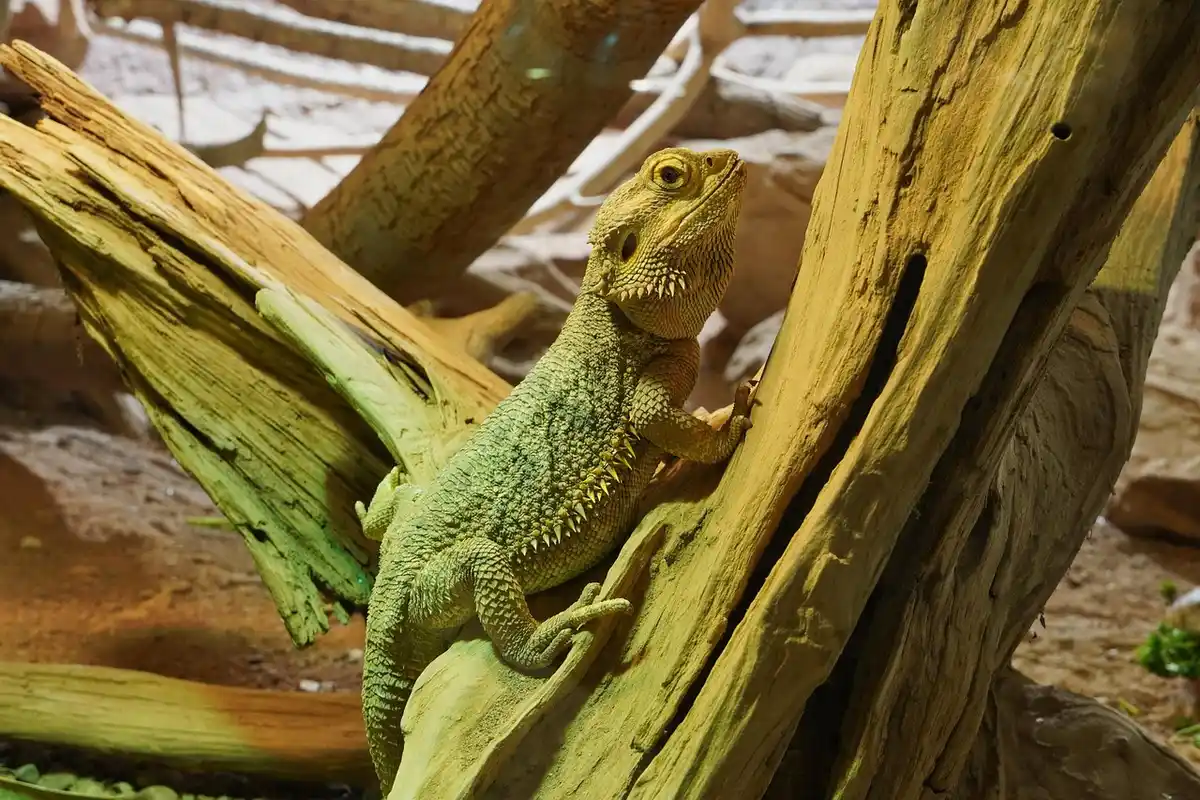
Your bearded dragon is a cold-blooded animal that relies on you to provide the right temperatures to digest food, stay active, and remain healthy. I learned this the hard way when my first dragon, Spike, became sluggish because his tank was too cool. You must create a distinct heat gradient, with a hot basking area on one end and a cooler zone on the other. This allows your dragon to self-regulate its body temperature by moving between the two. Because bearded dragons are cold-blooded, they must regulate body temperature with external heat sources. Meeting these bearded dragon temperature regulation needs—via a warm basking spot and a cooler area—helps them digest meals, stay active, and stay healthy.
Here is the temperature breakdown you need to aim for:
- Basking Spot Surface Temperature: 95-110°F (35-43°C) for adults, and up to 110°F (43°C) for babies.
- Warm Side Ambient Temperature: 85-90°F (29-32°C).
- Cool Side Ambient Temperature: 75-85°F (24-29°C).
- Nighttime Temperature: Can drop to 65-75°F (18-24°C). No heat source is needed unless your house gets colder than this.
Use a high-quality basking lamp placed over a sturdy platform, like a flat rock or a reptile hammock. Always use thermostat controllers and digital thermometers to prevent dangerous overheating and to get accurate readings. I never rely on the stick-on dial thermometers anymore; they just aren’t precise enough for such an important job.
UVB Lighting Requirements for Metabolic Health
This is the most common mistake I see new owners make, and it breaks my heart. UVB light is non-negotiable. Without proper UVB exposure, your bearded dragon cannot metabolize calcium, leading to Metabolic Bone Disease (MBD), a painful and often fatal condition. A simple heat bulb does not provide UVB. In a bearded dragon lighting guide, you’ll learn UVB requirements, the right use of heat lamps, and how to establish a daily light cycle. This knowledge helps you keep calcium metabolism on track and your dragon thriving.
Follow these steps for a healthy setup:
- Choose a long, tube-style UVB light that spans about half to two-thirds the tank’s length. Compact coil bulbs are insufficient.
- For a screen-topped tank, you may need a T5 HO (High Output) bulb placed on top. For a tank without a screen, a T8 bulb mounted inside the enclosure works.
- The UVB bulb should be placed to overlap with the basking area so your dragon gets both heat and UVB at once.
- Replace the UVB bulb every 6-12 months, as its invisible rays degrade over time even if the bulb still appears to be lit.
Selecting Safe Substrate and Flooring
What you put on the bottom of the tank is a huge topic of debate, but my philosophy is always safety first. Loose substrates like sand, calcium sand, or walnut shells pose a high risk of impaction if ingested. I strongly advise against loose particulate substrates, especially for juvenile bearded dragons who are more likely to lick their environment. In a bearded dragon substrate guide, it’s helpful to review safe options such as reptile carpet, tile, or paper towels. We’ll also highlight unsafe materials to avoid and best practices for substrate management.
Here are the safest and most recommended options:
- Slate or Ceramic Tiles: My personal favorite. They are easy to clean, hold heat beautifully for basking, and keep your dragon’s nails filed down.
- Reptile Carpets: Be cautious with these. While they look nice, they can snag claws and harbor bacteria if not washed frequently.
- Paper Towel/Butcher Paper: The absolute safest, cheapest option for quarantine tanks or new arrivals.
Non-Adhesive Shelf Liner: This is a very affordable, easy-to-wipe-clean option that provides solid footing.
Must-Have Bearded Dragon Tank Accessories and Decor
Hides and Secure Hiding Places for Stress Reduction
Even the friendliest bearded dragon needs a private retreat. Hides are essential for making your pet feel secure and reducing stress. You should provide at least one hide on both the warm and cool sides of the tank. This gives your dragon a safe place to retreat to no matter what temperature zone it’s in. In a bearded dragon tank setup guide, you’ll also want to consider essential equipment, safe decor, and safety practices. These choices help ensure your dragon’s habitat is secure, comfortable, and enriching.
I use a simple, store-bought cave on the warm side and a half-log on the cooler side for my dragons. Watching them instantly relax when they scoot into their hides confirms how vital these spaces are for their well-being. Make sure the hide is just large enough for your dragon to fit inside snugly.
Climbing Branches and Basking Platforms for Enrichment
Bearded dragons are semi-arboreal, meaning they love to climb! A flat, empty tank is a boring tank. Adding climbing structures mimics their natural rocky Australian outcrops and provides crucial mental and physical stimulation. But be sure to check what they can and can’t climb to prevent any injuries.
Look for these items to create a engaging landscape:
- Sturdy, untreated branches or driftwood that won’t tip over.
- Artificial or real rocks stacked to create different levels.
- Reptile hammocks, which are a huge hit for lounging and basking.
Arrange these items to create multiple pathways and levels, leading up to the main basking spot. This encourages natural behaviors like exploring and climbing, which keeps your dragon active and healthy.
Feeding and Hydration Stations
How you offer food and water can impact cleanliness and your dragon’s health. I don’t use deep water bowls because my dragons have never shown interest in drinking from them, and young dragons can sometimes fall in. Instead, I provide hydration through daily soaks and by misting their salad greens.
For feeding, a simple shallow ceramic or plastic dish is perfect for salad. It keeps the greens in one place and prevents your dragon from accidentally ingesting substrate. For live insects like crickets or dubia roaches, I feed them in a separate, smooth-sided feeding dish to prevent escapes and make clean-up easy. This also allows you to monitor exactly how much your dragon is eating.
Step-by-Step Guide to Setting Up Your Bearded Dragon’s New Home
Getting a new tank is exciting, but setting it up correctly is what keeps your dragon thriving. I’ve set up more enclosures than I can count, and this method has never failed me.
Step 1: Choose and Prepare Your Substrate
Start from the ground up. For baby dragons, I always use a solid substrate like reptile carpet, paper towel, or slate tile. Loose substrates like sand are a huge impaction risk for little ones and should be avoided entirely. For adults, a sand-soil mix can work, but many owners, including myself, prefer the safety and easy cleanup of tile.
Step 2: Install Heating and Lighting
This is the engine of your habitat. You must establish a proper temperature gradient.
- Place your heat lamp (a white incandescent bulb or halogen) on one side of the tank to create a basking spot of 95-110°F.
- The opposite, cool side should be around 80-85°F.
- Mount your UVB light fixture inside the tank if you have a mesh top, as the screen blocks a significant amount of crucial UVB rays.
Your UVB light is non-negotiable for their bone health; turn it on for 12-14 hours a day.
Step 3: Add Decor and Hides
Now for the fun part-making it a home! A bare tank is a stressed dragon.
- Basking Spot: Provide a sturdy branch or rock directly under the heat lamp.
- Hides: Place at least one hide on the warm side and one on the cool side. This gives them a safe place to retreat and regulate their temperature.
- Enrichment: Add some fake or dragon-safe live plants, a hammock, or other climbable structures. My dragons love climbing on their background walls!
Step 4: Final Checks Before Your Dragon Moves In
Do not skip this step. I always let the tank run for at least 24 hours before introducing a dragon.
- Use digital thermometers on both the warm and cool sides. Do not rely on the cheap stick-on dials-they are notoriously inaccurate.
- Double-check that all cords are secure and out of reach to prevent burns or entanglement.
- Ensure everything is stable and can’t fall over, as these curious climbers will test every item’s structural integrity.
A stable, pre-heated environment drastically reduces relocation stress for your new pet.
When and How to Upgrade Your Bearded Dragon’s Tank
Watching your beardie grow is rewarding, but it means their housing needs change. Knowing when to upgrade is a key part of responsible ownership.
Recognizing the Signs It’s Time for a Bigger Home
Your dragon will tell you when they’re feeling cramped; you just need to know what to look for.
- Glass Surfing: This is when they constantly scratch at the glass walls. While sometimes related to seeing their reflection, it’s often a sign of stress from a tank that’s too small.
- Lethargy or Lack of Appetite: A dragon that doesn’t have enough space to explore and exercise can become bored and inactive.
- The “Nose-to-Tail” Test: A good rule of thumb is that the length of the enclosure should be at least twice the length of your adult dragon. If your dragon is approaching the ends of the tank, it’s upgrade time.
- Stunted Growth: While diet is a major factor, a chronically undersized tank can physically and mentally inhibit a growing dragon.
I upgraded my first dragon too late and saw a dramatic positive change in her behavior and appetite almost immediately in the larger space. Don’t make my mistake.
Seamless Transition: Moving Your Dragon to a Larger Enclosure
A big move can be stressful. The goal is to make it as smooth and familiar as possible.
- Set Up the New Tank First: Fully set up the new 120-gallon tank with heating, lighting, and substrate before you even think about moving your pet. Get the temperatures perfect.
- Transfer Familiar Items: Move over their favorite basking rock, hide, and hammock. The smell of these items in the new space provides immediate comfort and recognition.
- Place Your Dragon Last: Once the new habitat is running and stable, gently place your dragon inside, preferably near their familiar basking spot.
- Expect an Adjustment Period: It’s normal for them to be a bit skittish, hide more, or eat less for a few days. Give them space and avoid handling them for a bit. Minimizing stress during this transition is the most important thing you can do.
- Monitor Closely: Watch to ensure they are finding their food, water, and can properly thermoregulate by moving between the warm and cool sides.
Finding the Right Bearded Dragon Tank and Enclosure

Choosing the actual enclosure is where the fun begins, but it can also feel overwhelming with all the options. I’ve made a few purchases I regretted early on, learning the hard way that not all cages are created equal.
Pros and Cons of Standard Tanks vs. Custom Reptile Enclosures
You’ll mainly be deciding between a standard glass aquarium and a front-opening PVC enclosure. Both have their place, and the best choice often depends on your budget and your dragon’s personality.
| Enclosure Type | Pros | Cons |
|---|---|---|
| Standard Glass Tank |
|
|
| Front-Opening PVC Enclosure |
|
|
My personal preference has shifted entirely to front-opening PVC cages after seeing how much calmer my dragons are during interaction. The reduction in stress for both of us is worth every extra penny.
Where to Look for a Bearded Dragon Tank for Sale
You don’t have to break the bank to get a proper setup. I’ve built my collection through a mix of new and used finds.
- Major Pet Store Chains: Places like PetSmart and PetCo are convenient for standard glass tanks, especially during dollar-per-gallon sales. This is a solid option for a starter tank for a juvenile, but I rarely recommend their all-in-one kits, as the included accessories are often low quality.
- Online Reptile Specialty Retailers: Websites like Chewy, Reptile Basics, and Dubia.com are fantastic for both PVC enclosures and standard tanks. You get a wider selection and often better prices on higher-quality habitats.
- The Used Market (Facebook Marketplace, Craigslist): This is my secret weapon. I found my 120-gallon Zen Habitat for half the price on Facebook Marketplace. Always inspect used tanks thoroughly for cracks, check that doors slide smoothly, and plan to disinfect everything with a veterinary-grade cleaner like F10SC or a diluted bleach solution before use.
- Reptile Expos: If you have one nearby, a reptile expo is a fantastic place to see enclosures in person and talk directly with the manufacturers. You can sometimes snag a show special deal.
No matter where you shop, always measure your space at home first. That beautiful 4x2x2 enclosure is useless if it doesn’t fit on your stand or in the corner you’ve lovingly cleared for it. I may or may not have learned this lesson the hard way with a couch that had to be permanently relocated!
FAQs
What is the temperature of a bearded dragon tank?
A bearded dragon tank requires a specific temperature gradient to support their health. You need a basking spot of 95-110°F, a warm side ambient temperature of 85-90°F, and a cool side of 75-85°F to allow for proper thermoregulation. This is part of a broader bearded dragon temperature guide. It also covers nighttime temperatures and the overall tank requirements.
What are bearded dragon tank accessories?
Essential accessories include secure hides on both the warm and cool sides, climbing branches, and basking platforms for enrichment. You will also need feeding dishes for salads and insects, but deep water bowls are often avoided to prevent accidents.
Where can I find a bearded dragon tank for sale?
You can find tanks at major pet stores, online reptile specialty retailers, and the used market like Facebook Marketplace. Always inspect used tanks thoroughly for damage and disinfect them completely before use.
Final Thoughts
Getting the tank size right from the start is one of the most impactful choices you can make for your bearded dragon’s long-term health and happiness. Remember that a growing dragon is a happy dragon, and their enclosure needs to grow right along with them. Starting small for a baby is fine, but planning for that full-sized adult habitat is non-negotiable. To do that properly, map out the bearded dragon terrarium size requirements and the setup it will need as it grows. This helps ensure your enclosure keeps up with your dragon’s changing needs.
Ultimately, providing that spacious forever home-a 120-gallon tank or larger for an adult-isn’t just a recommendation; it’s a commitment to their welfare. When you give them the room to run, climb, and explore, you’re not just meeting a basic need; you’re giving them a rich, engaging life where they can truly thrive. From my own experience, watching a dragon fully utilize their properly sized territory is one of the most rewarding parts of being a keeper.
Further Reading & Sources
- r/BeardedDragons on Reddit: Adult bearded dragon tank size recommendations?
- What is the minimum tank size for a happy healthy bearded …
- What Do I Need for My Bearded Dragon Tank Setup?| PetSmart
Bearded Dragon Lair is the ultimate resource for bearded dragon enthusiasts, offering expert advice and practical tips to ensure the health and happiness of your scaly companion. With years of experience in reptile care, we are dedicated to providing accurate, up-to-date information to support your bearded dragon journey.
Tank Size and Type