
Bearded Dragon Hatchling Care Guide: Your Complete Starter Plan
Bringing home a tiny, wide-eyed bearded dragon hatchling is an incredible moment, but it’s normal to feel a little nervous about getting everything just right for your new, fragile friend.
As a longtime owner and reptile care specialist, I’ve raised many hatchlings from their first day home, and I’m here to walk you through it with clear, simple steps.
We’ll cover their exact housing setup, a hatchling’s specific feeding schedule, and the crucial health signs you need to watch for to ensure your little one thrives.
Getting Ready for Your New Baby Bearded Dragon
Bringing home a baby dragon is a thrill, but preparation is your best friend. I remember the mix of excitement and nervous energy before my first hatchling arrived. Having everything set up and running for at least 48 hours before your dragon comes home is non-negotiable. This gives you time to double-check temperatures and fix any last-minute issues. You want a stable, welcoming environment, not a chaotic setup process with a stressed-out baby watching you.
Create a “welcome kit” with all your essentials in one place. This includes your feeding tweezers, a small food dish, calcium supplements, and a digital thermometer. A dedicated space for your supplies makes daily care routines smooth and stress-free for both of you. Trust me, fumbling for dusting powder while a hungry hatchling stares you down is not the way to start your journey together.
Setting Up the Perfect Hatchling Terrarium
Choosing the Right Enclosure Size and Style
For a tiny hatchling, a massive tank can feel overwhelming and make it hard for them to find their food. I always start my babies in a 20-gallon long aquarium or a front-opening terrarium of similar size. A smaller space for the first few months helps them feel secure and makes hunting much easier. Front-opening enclosures are my personal favorite because you don’t have to reach down from above, which can scare a baby who sees you as a predator.
Think of this initial tank as their starter home. You must plan for their adult-sized 120-gallon enclosure from day one, as they grow astonishingly fast. This foresight saves money and hassle later. Glass tanks work well, but ensure the screen top is secure-these little guys can be surprisingly adventurous.
Mastering Temperature and Lighting
Getting the heat right is the most critical part of hatchling care. Their tiny bodies rely on us to create a perfect sun-soaked environment. You need to create a distinct temperature gradient.
- Basking Spot: This area needs to be a toasty 105-110°F. Use a digital probe thermometer right on the basking surface for an accurate reading.
- Cool Side: The opposite end of the tank should be a comfortable 80-85°F, providing a necessary escape from the heat.
- Nighttime: Temperatures can safely drop to 70-75°F. Do not use colored heat bulbs at night; if your home gets colder, use a ceramic heat emitter which produces no light.
Lighting goes hand-in-hand with heat. A high-quality UVB tube light is not optional; it is as vital as food and water for their bone development. I use a ReptiSun 10.0 T5 HO or Arcadia 12% linear bulb that spans half the tank’s length, placed alongside the basking spot. This mimics the natural sun and allows them to synthesize vitamin D3. Replace these bulbs every 6-12 months, as the invisible UV output diminishes over time. In a bearded dragon lighting guide, pair this UVB setup with a heat lamp to establish a reliable basking zone and daily cycle. Aim for about 12 hours of light each day, with UVB on during the day and darkness at night to support natural rhythms.
Selecting a Safe Substrate
The ground covering in your hatchling’s tank is a big safety decision. Their curiosity means they might taste anything on the floor.
For beginners and for all hatchlings, I strongly recommend simple, non-particle substrates. Paper towel, reptile carpet, or slate tiles are the safest, most worry-free choices for a young dragon. They are easy to clean and present zero risk of impaction, a serious condition where loose substrate blocks their gut. I used non-adhesive shelf liner for my first clutch-it was cheap, easy to wipe down, and gave them good traction.
Avoid these common but dangerous substrates for hatchlings:
- Loose calcium sand (it clumps when wet and is a major impaction risk).
- Crushed walnut shell (sharp and abrasive).
- Any loose particulate bedding they could accidentally ingest.
You can explore other substrates like a bioactive setup or textured tile when they are older and less prone to tasting everything in sight. Starting with a simple, safe substrate gives you one less thing to worry about during those critical first months.
Feeding Your Bearded Dragon Hatchling

Creating a Feeding Schedule and Portion Sizes
Feeding a baby bearded dragon is a huge commitment—they are literal eating machines. Their rapid growth demands a constant supply of fuel. I feed my hatchlings three to five times per day, offering them as many appropriately-sized insects as they can eat in a 10 to 15-minute window. That cadence is the heart of a complete feeding schedule for babies. As they grow, you’ll adjust frequency and portions to match their changing metabolism. It sounds like a lot, and it is, but this high-frequency feeding supports their intense metabolic needs.
Do not leave live prey roaming in the enclosure between meals. Uneaten insects can stress your tiny dragon and even nibble on them. After the feeding session is over, any remaining crickets or roaches should be removed. A consistent daily schedule helps them feel secure and supports healthy digestion. When planning feeding with crickets, be mindful of how often you should feed your bearded dragon crickets. Juveniles typically need daily insect feedings, while adults can be fed a few times per week, depending on appetite and body condition.
Live Prey and Insect Sizing
The golden rule for prey size is simple: never offer an insect wider than the space between your dragon’s eyes. This prevents choking and dangerous impactions. Stick to pinhead crickets, flightless fruit flies, and tiny dubia roach nymphs for the first few weeks of life. Bearded dragons can eat a wide range of insects, but not every bug is safe. Avoid dangerous options like fireflies, many caterpillars with spines, and insects treated with pesticides. I’ve found a varied diet from the start helps prevent picky eaters later on.
Here is a quick list of excellent staple feeders for hatchlings:
- Dubia Roach Nymphs (extra small)
- Black Soldier Fly Larvae (also called calci-worms or phoenix worms)
- Small Crickets (pinhead or 1/4 inch)
While treats are fun, avoid large, hard-to-digest insects like superworms at this fragile stage. Their little bodies can’t handle it.
The Critical Role of Supplementation and Hydration
This is non-negotiable for raising a healthy dragon. Without proper supplementation, hatchlings can develop Metabolic Bone Disease (MBD), which is heartbreaking and often fatal. I lightly dust every single insect feeding with a pure calcium powder that does not contain vitamin D3. Then, one feeding per day, I alternate between a calcium powder with D3 and a high-quality multivitamin. Finding the right balance is vital—too much calcium can also be harmful.
Hydration is another area where new owners often struggle. Hatchlings rarely recognize a water bowl. I provide hydration by gently misting their salad greens with water and by giving them a shallow warm bath two to three times a week. Watching them drink the water droplets is a sure sign they need it. Proper hydration keeps their systems running smoothly and aids in shedding.
Monitoring Hatchling Health and Recognizing Problems
Understanding Normal Shedding
Your baby dragon will shed its skin frequently—sometimes it feels like every other week! This is a sign of good health and rapid growth. A healthy shed comes off in large patches, not tiny flakes, and the dragon will often appear dull or grayish beforehand. You will see them rubbing against rocks and decor to help the process along.
Never, ever pull at the loose skin. This can tear their new, delicate skin underneath. If you see stuck shed, especially around the toes, tail tip, or eyes, provide a warm bath and gently brush the area with a soft-bristled toothbrush. Stuck shed can constrict blood flow and lead to the loss of digits.
Spotting Early Signs of Illness
Hatchlings are vulnerable, so catching a problem early is critical. You need to become a keen observer of their normal behavior. The most immediate red flag for me is a loss of appetite combined with lethargy; a baby dragon that isn’t eager to eat is a dragon in trouble.
Keep a close watch for these other warning signs:
- Runny, foul-smelling, or discolored poop
- Sunken eyes or wrinkled skin (signs of dehydration)
- Staying on the cool side of the tank all the time
- Twitching limbs or a wobbly walk (potential sign of MBD)
- Gaping or breathing with an open mouth when not basking
Trust your gut. If something seems off, do not wait. Finding a reptile-savvy veterinarian before you have an emergency is one of the best things you can do for your new pet. I have a vet on speed dial, and it has saved more than one of my dragons over the years.
Handling and Socializing Your Baby Bearded Dragon

Building trust with a hatchling is a delicate dance. Their world is huge and you are a giant in it. I always start by simply placing my hand in the tank for five minutes at a time, not moving, letting them get used to my presence and scent. This builds a foundation of non-threatening interactions.
When you begin to pick them up, be slow and confident. Scoop from below, supporting their entire belly and all four legs. Never grab from above like a predator would.
- Start with very short, 5-minute sessions once they seem comfortable.
- Always handle them low over a soft surface, like your bed or a couch.
- Sit on the floor to minimize the danger of a long fall.
- Speak to them in a calm, low voice during handling.
Watch their body language closely. A stressed beardie will turn their beard black, gape (open their mouth), or try to flee. If you see any signs of stress, gently place them back in their enclosure and try again later. Pushing them too hard will break the trust you’re trying to build. With my first beardie, Klaus, it took three weeks of daily effort before he stopped puffing up at my hand.
Tracking Growth and Developmental Milestones
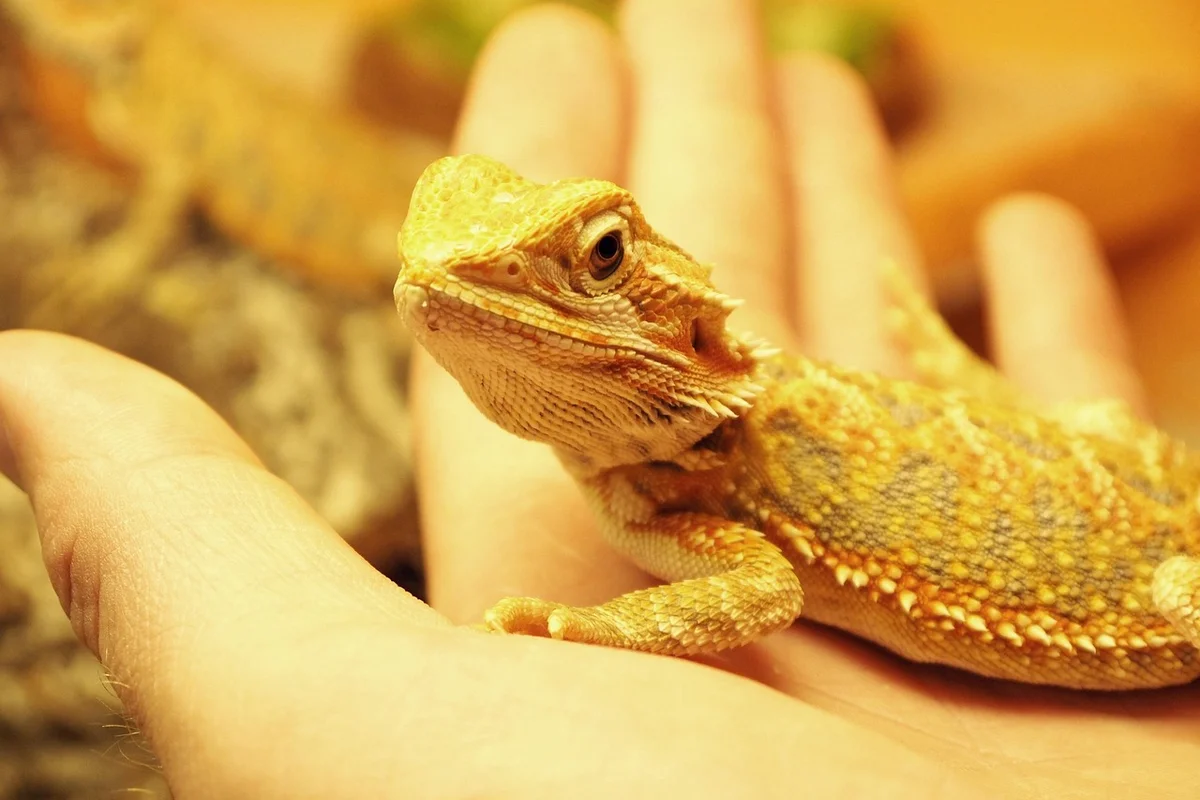
A healthy baby bearded dragon grows at an astonishing rate. Knowing their size growth patterns helps you recognize normal development and anticipate milestones. Keeping a simple log helps you ensure they are on the right track and can alert you to potential health issues early.
I use a small notebook to track three key things each week. This takes only a few minutes but provides priceless peace of mind.
- Weight: Weigh them weekly using a small digital gram scale. A consistent upward trend is what you want to see.
- Length: Measure from snout to tail tip. They can grow over an inch per month!
- Appetite: Note their interest in food. A sudden drop is often the first sign of trouble.
Here is a basic growth chart to use as a guideline. Remember, each dragon is an individual, so use this as a reference, not a strict rule. For more detailed information on size expectations, check out our month-by-month growth guide.
| Age | Average Weight | Average Length |
|---|---|---|
| 1 Month | 5-10 grams | 4-6 inches |
| 2 Months | 15-25 grams | 7-9 inches |
| 3 Months | 30-60 grams | 10-12 inches |
Transitioning from Neonatal to Juvenile Care
This transition isn’t marked by a single birthday but by a series of developmental shifts. You’ll notice their appetite for insects becomes voracious, and their personality starts to shine. The biggest change you’ll make is adjusting their diet to include more vegetables and reducing insect feedings from multiple times a day to just 2-3 times.
Their housing needs will evolve, too. Around 4-6 months of age, start planning for their adult enclosure. A 75-gallon tank is the minimum I recommend for an adult, but a 120-gallon is even better for their long-term well-being.
- Diet shifts to 70% insects / 30% veggies, gradually moving toward a 20/80 adult ratio.
- You can handle them for longer periods as they become more robust and confident.
- Their growth rate will slow noticeably, which is completely normal and healthy.
This is a rewarding phase where you see the results of your careful early work. Watching a skittish hatchling blossom into a curious, hand-tame juvenile is one of the greatest joys of keeping these animals.
Frequently Asked Questions
How can I ensure I’m buying a healthy bearded dragon hatchling?
Look for hatchlings that are active, alert, and have clear eyes, a full belly, and no signs of lethargy or stuck shed. Always purchase from reputable breeders who offer health guarantees and can provide details on the hatchling’s care history.
Why is my bearded dragon hatchling not eating and what can I do?
A hatchling may refuse food due to stress from relocation, incorrect tank temperatures, or underlying health issues. Double-check your setup’s basking and UVB lighting, minimize handling, and consult a reptile veterinarian if the problem continues beyond a couple of days.
What should I do if my bearded dragon lays eggs?
If your female lays eggs, provide a lay box with damp substrate like vermiculite to prevent dehydration and support egg-laying. Incubate fertile eggs in a dedicated incubator at 80-85°F, but discard infertile eggs as they won’t hatch and can mold.
Final Thoughts
Raising a hatchling is a huge responsibility, but it’s also an incredibly rewarding journey. The effort you put in during these first few fragile months sets the foundation for a long, healthy, and happy life for your tiny dragon. From my own experience, the daily attention you give them now builds a bond of trust that lasts a lifetime.
Stay observant, keep their home warm and nourishing, and always prioritize their welfare. Watching that tiny hatchling grow into a thriving, majestic adult is one of the greatest joys of being a reptile keeper. You’ve got this.
Further Reading & Sources
- Hatchling Care – Care of Bearded Dragons (Pogona vitticeps)
- Baby Bearded Dragon Care Guide | Zen Habitats
- Caring for Your Hatchling Bearded Dragon: Navigating the …
Bearded Dragon Lair is the ultimate resource for bearded dragon enthusiasts, offering expert advice and practical tips to ensure the health and happiness of your scaly companion. With years of experience in reptile care, we are dedicated to providing accurate, up-to-date information to support your bearded dragon journey.
Hatchling Care