
Do Female Bearded Dragons Get Periods?
If you’ve noticed changes in your female bearded dragon’s behavior or appetite, you might be wondering if she’s experiencing a menstrual cycle like humans do.
As a long-time beardie owner who has personally navigated the unique challenges of female dragon care, I’m here to clear up the confusion with straightforward, factual information.
We’ll explore the fascinating truth about their reproductive anatomy, explain their actual egg-laying cycle, and highlight the health signs every owner should watch for.
Understanding Reptile Reproduction vs. Mammals
Let’s clear this up right away: female bearded dragons do not have periods. I remember wondering this myself when I first saw my dragon, Saphira, digging frantically in her tank. Menstrual cycles are a biological process unique to some mammals, not reptiles. Their reproductive systems operate on a completely different blueprint — you can read more about what makes reptiles different from mammals.
The biggest difference lies in what happens with the egg. In mammals like us, if a released egg isn’t fertilized, the nutrient-rich uterine lining is shed—that’s a period. For egg-laying reptiles like beardies, that entire process is skipped. Think of it like a chicken; you don’t expect a chicken to have a period before it lays an egg. Beardies can lay eggs without mating. If there’s no fertilization, those eggs are infertile and won’t develop. The resources only get allocated if an egg is actually developing.
Their cycles are driven by seasons, not monthly hormones. Bearded dragons are cued by longer daylight hours and warmer temperatures to enter their breeding season. This is when their bodies become primed for reproduction, whether a male is present or not. However, understanding how often they actually lay eggs, especially in the absence of a male, is crucial for their care. Regular monitoring can help ensure the health of the dragon and address any concerns related to infertile eggs. Learn more about their egg-laying frequency and the nuances involved.
Female Bearded Dragon Reproductive Anatomy
Inside your female dragon, the setup is elegant and efficient for producing eggs. She has two main ovaries, which look like small clusters of tiny, yellowish bubbles. These ovaries hold all the undeveloped egg yolks, called ova, that she will ever have. When the breeding season hits, specific ova start to grow and accumulate yolk. In a gravid female, those developing ova become eggs that will be laid in a clutch. The exact timing—the bearded dragon pregnancy egg-laying timeline—depends on temperature, nutrition, and overall health.
Once an ovum is ready, it’s released into a long, coiled tube called an oviduct. This is where the magic happens. The oviduct is like a factory assembly line, adding the egg white (albumen) and then secreting the shell and its pigment. This is a very calcium-intensive process, which is why we stress calcium supplements so much for our girls.
Hormones like estrogen and progesterone play the conductor in this symphony. Estrogen helps prepare the body for reproduction, while progesterone supports the maintenance of the pregnancy, or gravid state. It’s a delicate hormonal dance that makes egg production possible.
Critically, she lacks a uterus. The absence of a uterus is the key reason there is no menstrual cycle. There is no lining to build up and shed each month. The finished egg travels from the oviduct directly to the cloaca, a multi-purpose chamber used for reproduction and excretion, before being laid.
The Egg Laying Cycle: From Ovulation to Clutch
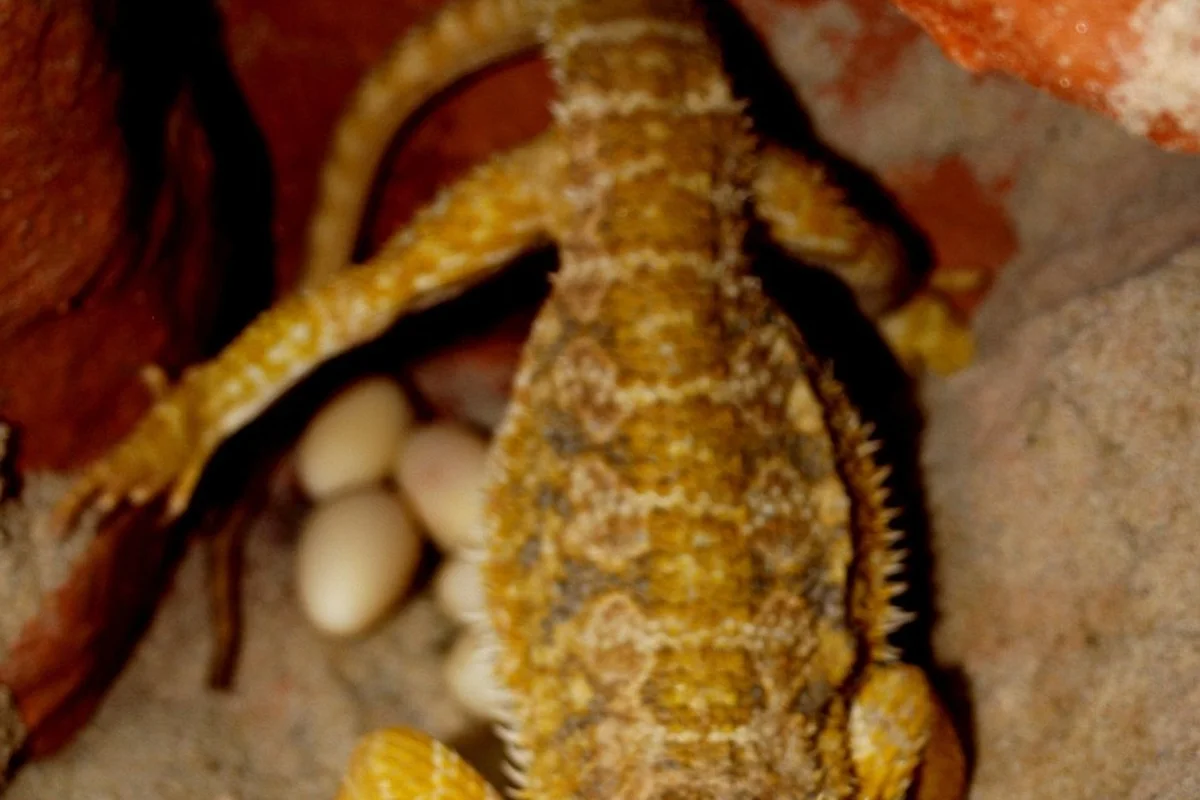
Female bearded dragons don’t have a menstrual cycle, but they do go through a distinct and energy-intensive reproductive process. Understanding this cycle is your first step in providing the right support for your pet. Owners often ask about brumation—when bearded dragons brumate and how seasonal timing affects care. Knowing the timing helps you plan temperatures, lighting, and feeding through the change.
The Stages of Egg Development
- Follicular Development: This is the starting point. Small follicles (undeveloped eggs) begin to grow on her ovaries, stimulated by the right environmental conditions.
- Ovulation: The developed follicles are released from the ovaries. You might notice her abdomen starting to look fuller and rounder at this stage.
- Egg Shelling: The ovulated follicles travel down the oviducts, where they are fertilized if she has been with a male. If not, they remain infertile. A shell of calcium is deposited around each one.
- Laying: Finally, she will seek out a suitable spot to dig a burrow and deposit her clutch of eggs.
Environmental Triggers
In the wild, this entire cycle is kicked off by seasonal changes. In captivity, we replicate this with consistent lighting and temperature cycles. Longer daylight hours (12-14 hours) and warm, consistent basking spots signal to her body that it’s the right time for reproduction. A sudden change in these conditions can sometimes trigger the process unexpectedly.
Clutch Size and Infertile Eggs
You might be surprised by how many eggs she lays. A clutch can range from 15 to 35 eggs, but I’ve seen some of my girls produce even more. Factors like her age, size, overall health, and genetics all influence the final clutch size. To tell if any of the eggs are fertile, you can candle the clutch after about a week to look for development. Fertile eggs will show veins and a developing embryo; infertile eggs stay pale and don’t develop. Even a female living alone will often lay a clutch of infertile eggs, commonly called “slugs.” These are usually smaller, more yellow, and squishier than fertile eggs.
Signs Your Female is Gravid or Ovulating
Recognizing the signs early gives you a head start on her care. I’ve learned to spot the subtle shifts in behavior and appearance that signal the start of this process.
Behavioral Changes
- Frantic Digging: This is the biggest giveaway. She will scratch at the corners of her tank, desperately looking for the perfect spot to lay her eggs.
- Restlessness: She’ll pace her enclosure almost constantly and seem unable to settle down.
- Decreased Appetite: As her abdomen becomes more crowded with eggs, she will have less room for food and may stop eating entirely.
- Glass Surfing: The urge to find a nesting site can make her try to climb the walls of her tank.
Physical Signs
- Swollen Abdomen: Her belly will become noticeably round and firm to the touch.
- Weight Gain: Even if she’s not eating, she will gain weight from the developing eggs.
- Palpable Eggs: If you gently run your fingers along her sides, you may feel small, oval-shaped lumps-the eggs.
Hormonal Behaviors
You might see some unexpected actions. Hormonal surges can cause solitary females to exhibit arm-waving or even head-bobbing, behaviors typically associated with males. Don’t be alarmed; it’s just her body reacting to the changes. From my experience, the frantic digging is the most reliable sign that she’s getting very close to laying.
Essential Care for Gravid Bearded Dragons
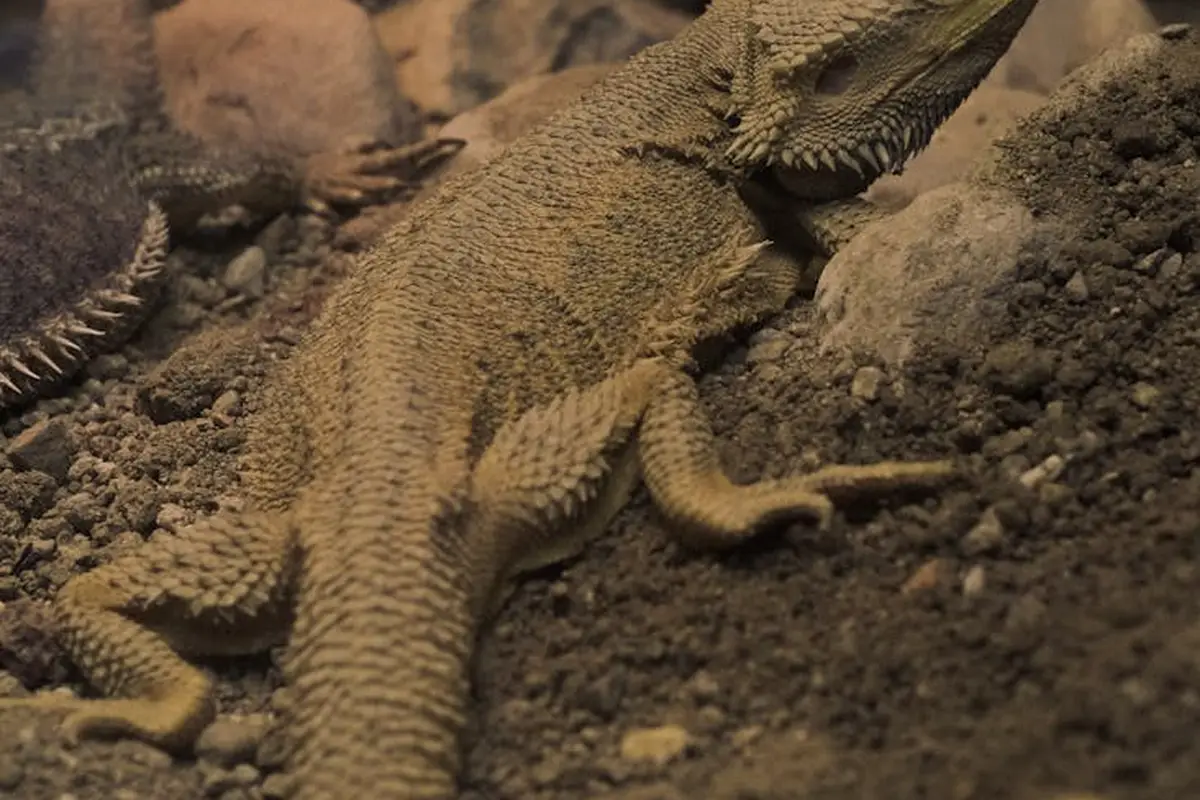
A gravid female is working incredibly hard, and her needs change dramatically. Your care during this time is vital for her health and the success of her egg-laying.
Critical Nutrition
- Increase Calcium: She is using massive amounts of calcium to form eggshells. Dust her food with a high-quality calcium supplement daily to prevent life-threatening calcium deficiency (egg-binding).
- Boost Protein: Offer more feeder insects like dubia roaches or black soldier fly larvae to support her energy needs.
- Hydration is Key: Offer water daily and consider giving her warm baths to encourage hydration, which can help the laying process.
The Nesting Box Setup
If she’s digging frantically, she needs a proper place to lay. A nesting box can prevent egg-binding and reduce her stress immensely. I use a large, opaque tub filled at least 10-12 inches deep with a mix of damp play sand and soil. The substrate should be damp enough to hold a tunnel shape when she digs. Place this box in her warm enclosure and give her privacy.
Optimal Environment
- Basking Temperature: Ensure her basking spot is a consistent 95-100°F (35-38°C). She needs this warmth for digestion and energy.
- UVB Lighting: Do not skip this! Proper UVB is non-negotiable as it allows her body to use the calcium you’re providing.
Reducing Stress
This is a sensitive time. Limit handling to only what is necessary, and keep her enclosure in a quiet, low-traffic area. Once she has access to her nesting box, try not to disturb her. Watch from a distance to make sure she progresses. I always feel a huge wave of relief once I see her back in her basking spot, looking noticeably thinner and more relaxed after a successful lay.
Recognizing and Preventing Reproductive Health Issues
Just like any animal, female bearded dragons are susceptible to specific health challenges related to their reproductive system. Being able to spot the early signs of trouble can literally save your dragon’s life, especially when compared to the health markers in male bearded dragons.
Egg Binding (Dystocia)
Egg binding, or dystocia, is a serious condition where a female is unable to lay her eggs. It’s a true medical emergency. From my own experience, a dragon I rescued years ago, named Ember, came to me severely egg-bound, and it was a scary race against time.
Watch for these symptoms:
- Lethargy and weakness; she may not want to move
- Repeated, forceful digging or straining with no results
- Loss of appetite, sometimes for several days
- Visible lumps on her lower sides or abdomen
- A swollen or tense cloaca
Common Causes and Related Conditions
Understanding what leads to these problems is the first step in prevention.
- Poor Nutrition: A lack of calcium is a huge factor. Without it, a female can’t form strong eggshells and her muscles can’t contract properly to push the eggs out.
- Inadequate Laying Site: If she doesn’t have a suitable, private place to dig, she may simply hold the eggs in.
- False Gravid (Follicular Stasis): This happens when her body develops egg follicles but never actually ovulates or shells them. Her body acts pregnant, but there are no shelled eggs to lay, which can still make her very sick.
- Hormonal Imbalances: General health, lighting, and temperature can all affect her reproductive cycle and hormone levels, sometimes causing irregularities.
Preventive Measures You Can Take
The good news is that many reproductive issues are preventable with proper husbandry. I’ve found these adjustments to be absolutely vital for my girls.
- Diet: Dust feeder insects with a high-quality calcium powder daily, and use a multivitamin a few times a week.
- UVB Lighting: Ensure your UVB bulb is strong and replaced every 6-12 months so she can actually use that calcium.
- The Laying Box: Always provide a lay box-a deep container filled with moistened soil and sand-as soon as you see any signs of gravid behavior.
- Hydration: Offer regular baths and mist her greens to keep her well-hydrated, which helps with the laying process.
When to Consult a Veterinarian
While prevention is key, sometimes you need professional help. Never hesitate to call an exotic vet if you are concerned; their expertise is irreplaceable.
Emergency Signs That Need a Vet
If you observe any of the following, it’s time to pack up your dragon and head to the clinic.
- Extreme lethargy or inability to lift her body
- Prolonged straining or digging without passing a single egg
- A visibly bloated or distended abdomen that feels hard
- Loss of appetite for more than a few days paired with other symptoms
- Paralysis in the back legs
What the Vet Will Do
Your veterinarian will perform a series of diagnostic steps to figure out the problem.
- Physical Exam & Palpation: They will gently feel her abdomen to detect eggs or other masses.
- X-rays: This is the gold standard. An X-ray clearly shows the number, size, and position of any shelled eggs and can reveal if they are misshapen.
- Blood Work: This checks for calcium levels and signs of infection.
- Ultrasound: Sometimes used to view soft tissue and unshelled follicles.
Common Treatments for Reproductive Issues
Treatment depends entirely on the diagnosis, but here are some common approaches.
- For Egg Binding: Vets may give calcium and oxytocin injections to induce contractions. If that fails, surgery (ovariohysterectomy) may be necessary to remove the eggs and often the reproductive tract to prevent future issues.
- For Infections: Antibiotics or anti-inflammatory medications are prescribed.
- Supportive Care: This includes fluid therapy for dehydration and assisted feeding if needed.
Scheduling proactive health checks, especially if you plan to breed, gives you a baseline and helps catch small problems before they become emergencies. A simple check-up can provide peace of mind and ensure your scaly friend stays healthy through her reproductive years.
Frequently Asked Questions
How often do female bearded dragons lay eggs in captivity?
In captivity, female bearded dragons typically lay 1-3 clutches per year, influenced by factors like age, health, and environmental conditions. This is not a regular monthly event but driven by seasonal cues like lighting and temperature. Clutch size—the number of eggs per clutch—can vary, so some clutches contain many eggs. Thus, the overall egg output depends on both clutch size and the frequency of clutches.
Is it possible to prevent a female bearded dragon from laying eggs?
While you cannot entirely halt their natural reproductive cycle, adjusting lighting and temperature to simulate non-breeding conditions may reduce egg-laying frequency. In cases of recurrent health issues, consult a veterinarian about options like spaying.
What should I do with the infertile eggs after my bearded dragon lays them?
Promptly remove infertile eggs from the enclosure to avoid decomposition and bacterial growth. Since they are not viable, you can safely dispose of them by sealing in a bag and discarding with household waste.
Final Thoughts
To put it simply, no, female bearded dragons do not have periods like humans do. Their reproductive cycle is entirely different and revolves around producing and laying eggs, whether they are fertile or not. Recognizing this fundamental difference helps us provide the right care for them. In many cases, a female will lay eggs even without a mate, and those eggs can be infertile or fertile. This is where the explanation of infertile vs fertile eggs in female bearded dragons comes in.
From my own experience, being aware of this cycle is one of the most important parts of caring for a female dragon. Always watch for signs of gravid behavior and ensure she has the proper nutrition and a suitable laying box to prevent serious health issues like being egg-bound. If you’re trying to determine pregnancy, there are seven key signs to look for. Recognizing these signs early helps you take the right steps to support her. Your informed care makes all the difference to her well-being.
Further Reading & Sources
- Life Stages and Cycle of a Bearded Dragon | Loving Your Pet
- Life Cycle – Bearded Dragon Lady
- REPRODUCTIVE BIOLOGY OF BEARDED DRAGONS
Bearded Dragon Lair is the ultimate resource for bearded dragon enthusiasts, offering expert advice and practical tips to ensure the health and happiness of your scaly companion. With years of experience in reptile care, we are dedicated to providing accurate, up-to-date information to support your bearded dragon journey.
Breeding Process