How to Tell if Your Bearded Dragon is Healthy: A Complete Health Check Guide
Published on: February 12, 2026 | Last Updated: February 12, 2026
Written By: Beardie Joe
You look at your scaly friend and wonder: are those bright eyes and active movements signs of a happy, healthy dragon, or is something quietly wrong?
Having shared my home with several bearded dragons over the years, I know that subtle changes can signal big issues, and I’m here to help you spot them with a simple, at-home assessment.
We’ll cover everything from their appetite and behavior to their skin, eyes, and overall body condition, giving you a clear checklist for peace of mind.
Key Signs of a Healthy Bearded Dragon
When you live with these incredible reptiles, you start to recognize the look of a truly thriving dragon. It’s not just one thing, but a beautiful combination of appearance and attitude. A healthy bearded dragon carries itself with a certain bright-eyed confidence that’s hard to miss once you know what to look for.
- Bright, clear eyes that are fully open and taking in their surroundings.
- A strong, sturdy body that is well-filled but not fat or bony.
- Consistent, energetic behavior for their age and the time of day.
- A hearty appetite and regular, well-formed bowel movements.
- Smooth, intact skin that sheds in large, clean pieces.
Active and Alert Behavior
Your dragon’s daily rhythm tells you a lot about their well-being. In my own tank, I see a predictable pattern of basking after lights on, a burst of activity for food, and then more relaxed alertness. A healthy dragon is curious about movement outside the tank and will often “glass surf” when they want out for exploration time.
- They should be alert and reactive to your presence and food offerings.
- Expect periods of intense activity mixed with calm basking.
- They should move without limping or dragging any part of their body.
- Head-raising and arm-waving are normal, curious communication behaviors.
- A healthy dragon will actively explore new items placed in their enclosure.
Clear Eyes and Healthy Mouth
I always start my health checks by looking my dragons right in the eye. Their eyes are windows to their health. Each eye should be bright, fully open, and free of any crusty discharge or swelling. They should not look sunken in or puffy. If you notice eyes that are bulging, sunken, or unusually swollen, that can signal illness and deserves closer attention. A vet visit is advised to rule out infection, dehydration, or vitamin A deficiency.
Gently opening their mouth (when they gape during basking is a perfect chance) reveals more clues.
- The inside of the mouth should be a healthy pink color.
- Look for smooth gums with no swelling, bleeding, or bumps.
- There should be no thick, stringy saliva or cheesy-looking material.
- The tongue should be pink and moist.
- Their jaw should be strong and symmetrical when closed.
Strong Appetite and Healthy Digestion
A good appetite is one of the most reassuring signs for me as an owner. My adults get excited and literally run to the front of the tank at feeding time. A healthy dragon shows a strong feeding response, eagerly chasing down live prey or munching on their greens.
What goes in must come out, and digestion is a direct reflection of internal health.
- They should produce firm, brown fecal matter with a white, pasty urate.
- Bowel movements should be regular for their age and diet.
- There should be no undigested food in their stool.
- They should not strain or appear uncomfortable when passing waste.
Your Step-by-Step Health Check Routine
I do a quick, hands-on check of my dragons every other week. It’s a bonding experience that helps me catch small issues before they become big problems. The key is to be calm and gentle, using slow movements to keep your dragon relaxed throughout the process.
- Wash your hands thoroughly before you begin.
- Sit in a safe, enclosed space where your dragon can’t jump and fall.
- Talk softly to your pet as you work from head to tail.
- Keep the session short, no more than five to ten minutes.
- Offer a favorite treat as a reward when you’re finished.
Assessing Body Condition and Weight
You want to feel for a body that is solid and well-covered. I gently run my fingers along my dragon’s spine and hips. You should be able to feel the bony structures, but they shouldn’t be sharp or protruding.
Their belly should be soft and full, not bloated and tight or sunken and empty.
- Track their weight monthly using a small kitchen scale.
- A healthy adult dragon should maintain a relatively stable weight.
- Fat pads on their head should be slightly rounded, not sunken.
- The base of the tail should be thick and muscular, not skinny.
Inspecting Skin, Scales, and Shedding
Healthy skin is a beautiful thing. I look over every inch, from their nose to the tip of their tail. Their scales should lie flat, be smooth to the touch, and be free of cuts, scrapes, or black, crusty spots.
Shedding should be a cyclical process, not a constant struggle.
- Check between their toes for any stuck shed that could cut off circulation.
- Look at their spikes along the head and sides; they should be straight and intact.
- Their vents should be clean and clear.
- Claws should be a good length, not overgrown or broken.
- A healthy shed comes off in large pieces, revealing bright new skin beneath.
Monitoring Hydration Status
Many bearded dragons don’t drink from a water bowl often, so we have to look for subtle signs. One of the easiest checks is the skin elasticity test; gently pinch the skin on their side, and it should snap back immediately. If dehydration is suspected, hydrate promptly. You can offer small sips of water or a shallow warm bath to encourage drinking, and contact a vet if it doesn’t improve.
Their urates, the white part of their poop, are a direct indicator of hydration.
- Well-hydrated urates are soft and white, not hard and chalky yellow.
- Their eyes should look bright and moist, not dull or sunken.
- Offer water via a dropper or mist their greens to boost intake.
- A warm bath twice a week encourages drinking and helps with hydration.
Understanding Poop and Urates: The Health Report Card
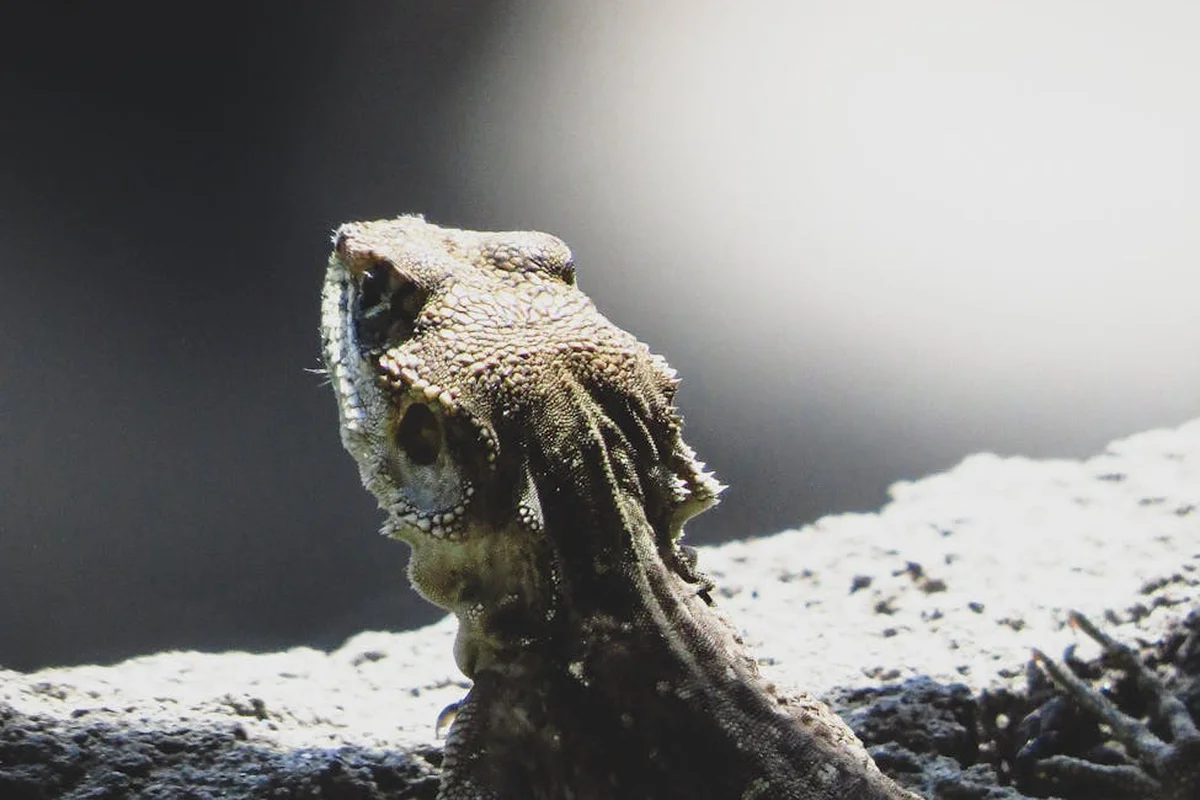
I always tell new owners that the terrarium floor is like a daily health report card. What comes out of your bearded dragon tells you almost everything about what’s going on inside. It’s the one area where I’ve caught minor issues before they became big problems with my own dragons.
What Healthy Bearded Dragon Poop Looks Like
A healthy stool is a beautiful sight for a reptile owner. It should be well-formed, firm, and log-shaped. The color is typically a dark brown, almost black. You’ll often see a solid, white or off-white section attached to it; that’s the urate, and it’s perfectly normal. A healthy poop is firm enough to pick up easily without leaving a messy smear behind. The smell is… present, but it shouldn’t be overwhelmingly foul.
Decoding the Urates (The White Part)
The urate is your dragon’s version of urine. It’s a concentrated paste of uric acid. In a perfectly hydrated dragon, the urates should be soft, like toothpaste, and pure white or a very light yellow. Properly hydrated urates are soft and moist, not chalky or hard. I check this part every single time I clean the tank.
Your At-a-Glance Waste Guide
- Healthy Poop: Dark brown/black, firm, log-shaped.
- Unhealthy Poop: Runny, watery, all green (not from food), or containing undigested insects.
- Healthy Urates: Soft, white or off-white, toothpaste consistency.
- Unhealthy Urates: Hard, chalky, or bright yellow/orange (signs of dehydration).
- Blood in Stool: A veterinary emergency. Contact your vet immediately.
If you see runny, consistently smelly stools or hard, yellow urates for more than a day or two, it’s time to assess your husbandry. Sudden, persistent changes in your dragon’s waste are one of the clearest signals they give us that something is wrong. Paying attention to this simple, daily detail is one of the most powerful things you can do for their long-term health. For a quick visual reference, see our healthy bearded dragon poop visual identification guide. It walks you through what normal waste looks like and flags changes to watch for.
Spotting Early Signs of Sickness
While a healthy dragon is a joy, these resilient pets are masters at hiding illness until it’s advanced. Catching subtle changes early is your most powerful tool for keeping your dragon thriving for years. I’ve learned to treat any deviation from their normal, bright-eyed behavior as a clue worth investigating.
- Lethargy vs. Alertness: A healthy dragon is curious and aware. A sick one may seem unusually still, sleep most of the day, or show little interest in its surroundings.
- Appetite Loss vs. Voracious Eating: A sudden, prolonged disinterest in food, especially their favorite bugs, is a major red flag. Healthy dragons are typically eager feeders.
- Persistent Stress Marks vs. A Clean Belly: Those dark markings on their beard and belly are normal during shedding or temporary stress. If they are constantly visible on a relaxed dragon, it can signal underlying discomfort or poor health.
Changes in Appetite and Basking Behavior
These two behaviors are like your dragon’s personal dashboard warning lights. A change in eating or basking habits is often the very first sign that something is off. I always notice this with my own dragons before any other symptom appears.
A drop in appetite can point to several issues. It could be impaction, parasites, or an infection. If your dragon is also lethargic, the problem is likely more serious.
Basking behavior is all about temperature regulation. A healthy dragon will spend part of the day soaking up heat to power its digestion and immune system.
- If your dragon is always hiding in the cool end and never basking, it can’t digest its food properly.
- If it’s constantly pressed against the hottest spot, it might be trying to fight off an infection or the overall tank temperature could be too low.
- Watch for a dragon that basks but doesn’t seem to get warm enough; it may have a serious internal issue.
Abnormalities in Breathing and Discharge
A healthy bearded dragon breathes smoothly and silently. You have to look closely to even see their sides moving. Any sound or visible effort when they breathe is an immediate cause for concern. Respiratory infections are common in reptiles and require swift veterinary care. To learn more how to treat a bearded dragon respiratory infection and other common health issues, make sure to consult a specialized vet.
Keep your ears open for any raspy, clicking, or wheezing sounds. Notice if they are breathing with their mouth open when they are not in the middle of cooling down (gaping). This is not normal resting behavior.
- Wheezing or Clicking: This often indicates mucus in the airways, a classic sign of a respiratory infection.
- Mucus or Bubbles: Look for any discharge around the nostrils or mouth. Bubbles coming from the nose or mouth are a serious warning sign.
- Open-Mouth Breathing at Rest: If your dragon is sitting still with its mouth open, it is struggling to breathe and needs a vet.
The Role of Perfect Habitat in Dragon Health
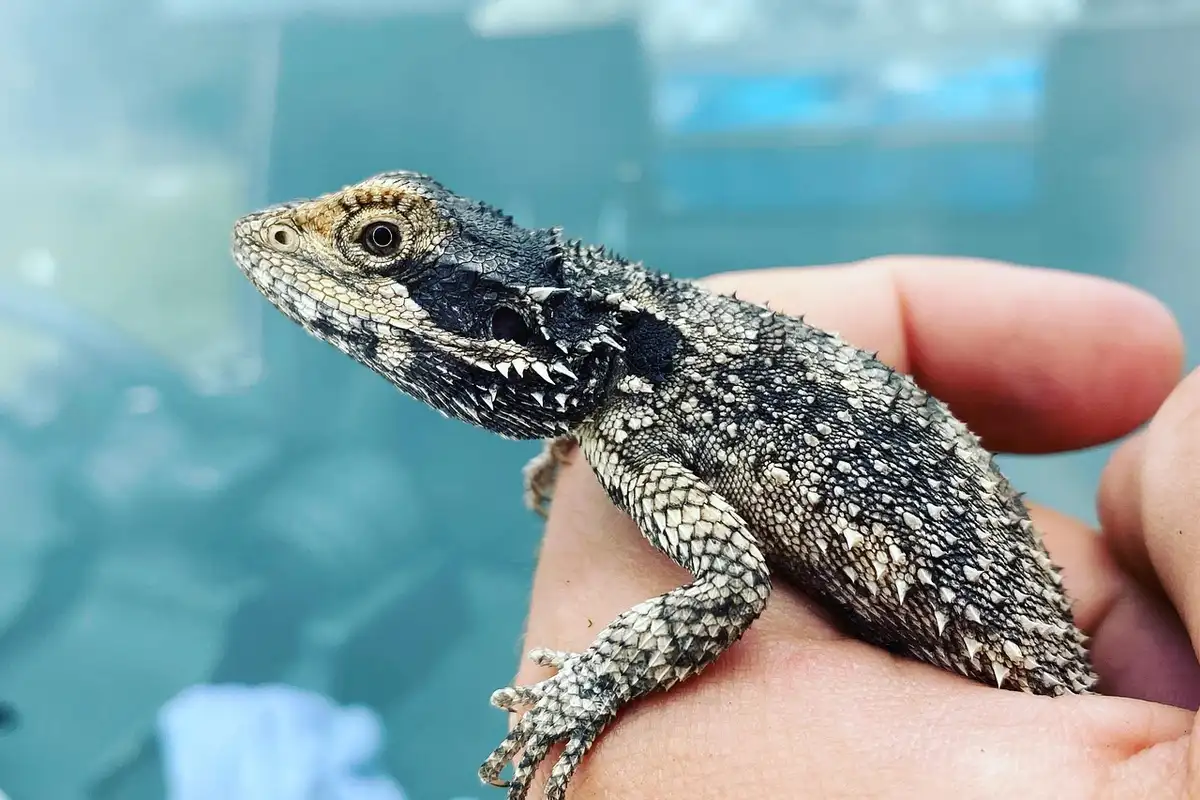
Think of your dragon’s enclosure as their entire world. What happens inside those four walls dictates almost everything about their physical well-being. Getting the habitat right is the single most impactful thing you can do to prevent vet visits and ensure a long, vibrant life. I’ve seen dragons transform from lethargic to lively simply by correcting a few key setup elements.
Many common health problems-from respiratory infections to deadly impaction-aren’t random; they’re direct consequences of an imperfect environment.
Critical Temperature and Basking Spots
Bearded dragons are solar-powered. They need external heat to power their internal systems. Without the right temperatures, their bodies simply shut down. Cold conditions push bearded dragons toward their critical minimum temperatures, making thresholds important to monitor. A cold-too-cold critical temperature guide helps you keep them safe and know exactly how to warm them up if needed.
Here is the exact temperature gradient you must provide:
- Basking Spot Surface Temperature: 95-110°F (35-43°C) for adults. Juveniles often prefer the higher end of this range.
- Warm Side Ambient Temperature: 85-90°F (29-32°C)
- Cool Side Ambient Temperature: 75-80°F (24-27°C)
- Nighttime Temperature: Can drop to 65-70°F (18-21°C). No heat source is needed unless your home gets colder.
You absolutely need a digital thermometer with a probe to measure the surface temperature of the basking spot accurately. Those little stick-on dials are notoriously unreliable. I use two digital gauges-one for the hot side, one for the cool side-and I check them weekly.
When my dragon Pancake settles onto his basking log, he flattens his body to maximize surface area. That’s how you know the temperature is just right for proper digestion and a strong immune system.
Essential UVB Lighting for Bone Health
This is not optional. It is as vital as food and water. Without proper UVB light, your bearded dragon cannot process calcium, leading to the painful and crippling Metabolic Bone Disease (MBD). I cannot stress this enough. In a bearded dragon survival guide, you’ll also learn how long a dragon can go without heat or UVB and how to act during outages. Even short outages can threaten health, so have backup heat/UVB solutions ready.
UVB light enables their skin to synthesize vitamin D3, which is the key that unlocks calcium absorption. No UVB means all that calcium dust you’re sprinkling on their food goes to waste.
To ensure your dragon gets what it needs:
- Use a long, tube-style UVB bulb that spans about half to two-thirds of the enclosure’s length.
- Compact coil bulbs are insufficient for the job.
- The bulb must be mounted inside the screen top or have the screen mesh cut out, as mesh blocks a significant amount of UVB rays.
- Follow the manufacturer’s distance guidelines precisely, typically 10-12 inches from the basking spot.
- Replace the bulb every 6-12 months, even if it still looks lit. The invisible UVB output degrades over time.
Seeing a dragon with MBD-their jaws gone soft, their limbs too weak to support their body-is a heartbreaking sight that is almost entirely preventable with the correct lighting setup.
When to Seek Professional Veterinary Care
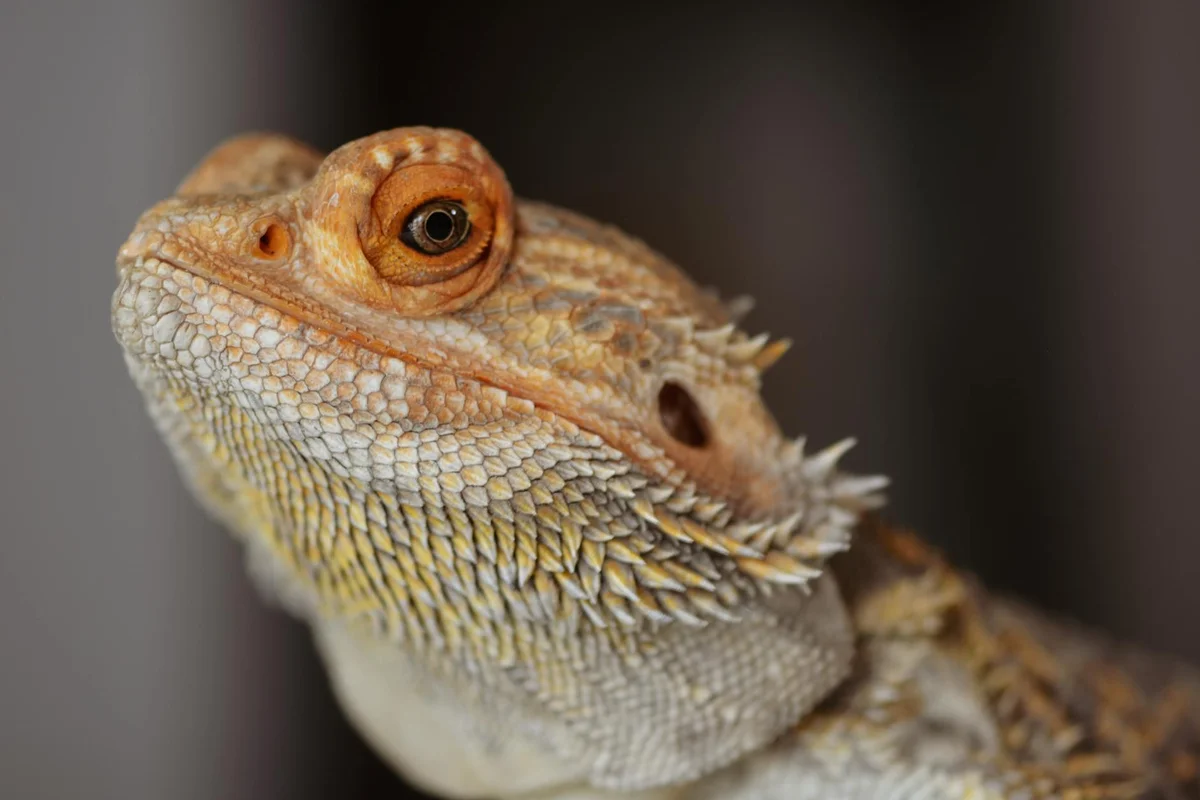
Trust your gut. If something feels off with your bearded dragon, it probably is, and waiting to see if it improves is rarely the right move. I’ve learned from my own dragons that their health can change rapidly, and having a good reptile vet on speed dial is non-negotiable – especially knowing when to take them in for a checkup or emergency visit.
Here is a clear list of symptoms that mean you should pick up the phone and call your veterinarian immediately.
-
Lethargy and Weakness
A dragon that is consistently listless, unable to lift its body off the ground, or seems too weak to climb needs help. This is not just a lazy day; it’s a sign their system is struggling.
-
Loss of Appetite
While adults can have occasional off-days, a juvenile that stops eating or any dragon that refuses food for more than a couple of days is a major concern. Rapid weight loss and sunken fat pads on their head are clear distress signals.
-
Breathing Troubles
Watch for open-mouth breathing, wheezing, or mucus around the nostrils. Respiratory infections are serious and require prescription medication to resolve. You might also notice them stretching their neck up to breathe more easily.
-
Eye Issues
Swollen, sunken, or constantly closed eyes are not normal. This can indicate anything from a simple irritation to a severe vitamin deficiency or infection.
-
Runny or Smelly Stool
Consistently watery droppings or feces with a uniquely foul, pungent odor can point to parasites or other internal issues. A fresh sample is incredibly helpful for your vet to diagnose the problem.
-
Discolored Skin or Sores
Look for black, dark, or bruised-looking patches of skin that aren’t part of their normal patterning. Any open wounds, persistent sores, or signs of scale rot need professional treatment to prevent infection.
-
Neurological Symptoms
This is an absolute emergency. If you see twitching, stumbling, circling, or seizures, your dragon needs veterinary intervention right away. This is one of the scariest things to witness, and immediate care is critical.
Frequently Asked Questions
Is pet health insurance available for bearded dragons?
Yes, some pet insurance providers offer plans for exotic pets like bearded dragons, which can help cover veterinary costs for accidents, illnesses, or emergencies, providing financial peace of mind for owners. Bearded dragons are generally considered exotic pets, a distinction that a complete ownership guide can help you navigate. Such a guide covers housing, diet, lighting, and legal considerations.
What should I include in a healthy diet for my bearded dragon?
A balanced diet consists of a variety of leafy greens, vegetables, and appropriately sized live insects, supplemented with calcium and vitamins to support overall health and prevent deficiencies.
How can I monitor my bearded dragon’s weight effectively?
Use a digital kitchen scale to weigh your dragon monthly, ensuring they maintain a stable weight with well-rounded fat pads and a muscular tail base, as sudden changes can indicate health issues.
Your Healthy Dragon Journey
Keeping your bearded dragon healthy boils down to consistent observation and proactive care. A healthy dragon is an active, alert, and hungry companion with bright eyes, a firm body, and regular bathroom habits. Trust your gut; you know your pet’s normal behavior better than anyone. Healthy is about noticing changes; any sudden shift could signal illness. Watch for signs like lethargy, loss of appetite, abnormal stools, or swelling, and consult a reptile veterinarian if you notice them.
Make these quick checks part of your daily routine. When you spot a potential issue early, you give your scaly friend the best chance for a long, vibrant, and wonderful life by your side.
Further Reading & Sources
- Bearded Dragon Health, Illness, & Disease Symptoms
- How to Tell if Your Bearded Dragon is Healthy – Zen Habitats
- Bearded Dragon Care Sheet | PetMD
Bearded Dragon Lair is the ultimate resource for bearded dragon enthusiasts, offering expert advice and practical tips to ensure the health and happiness of your scaly companion. With years of experience in reptile care, we are dedicated to providing accurate, up-to-date information to support your bearded dragon journey.
Signs of Illness