
Bearded Dragon Humidity: Your Complete Care Guide
Published on: February 6, 2026 | Last Updated: February 6, 2026
Written By: Beardie Joe
Is your bearded dragon’s habitat too dry or too damp, leaving you worried about their health?
After years of keeping multiple beardies myself, I’ve learned exactly how to create that perfect desert-like environment they thrive in.
We’ll cover the ideal humidity range, simple ways to measure it accurately, and my favorite tricks for maintaining perfect levels day and night.
Understanding Bearded Dragon Humidity Needs
I often see new owners focus only on heat and lighting, forgetting that humidity is the third pillar of a healthy habitat. Getting the humidity right is not just about comfort; it’s about preventing serious, often silent, health issues. In my own experience, when the humidity was off for my dragon, Spike, the first sign was always a change in his behavior-he’d become lethargic and lose his appetite. It’s crucial to monitor these physical signs and symptoms to ensure your bearded dragon stays healthy.
Bearded dragons are desert and arid woodland animals. Their bodies are built for dry heat. In the wild, they inhabit arid and semi-arid regions of inland Australia, from deserts to scrublands. Best anchor text: Bearded dragons in inland Australia. Alternatives: – Wild habitat of bearded dragons – Bearded dragons in the wild. They are not native to the United States. When the air is too moist for too long, it creates a breeding ground for trouble.
- Respiratory Infections: This is the biggest risk. Consistently high humidity leads to damp, stagnant air that their lungs simply can’t handle. You might hear wheezing or see mucus around their nose.
- Skin and Scale Issues: Fungal and bacterial skin infections thrive in a humid environment. This can lead to discolored scales or a condition called scale rot.
- Difficulty Shedding: While a small humidity boost can help with shedding, chronic high humidity can actually cause the shed skin to become sticky and trap moisture against the new skin underneath.
Think of it this way: you’re trying to replicate the dry, sun-baked outback, not a tropical rainforest. Their entire physiology, from how they breathe to how they absorb water, is designed for a low-moisture environment.
The Perfect Bearded Dragon Humidity Range
After years of keeping multiple dragons and talking with breeders, I’ve found a sweet spot that works. You want to aim for a range that keeps them hydrated enough without crossing into dangerous territory. Alongside this, my bearded dragon hydration guide walks you through practical misting, proper use of a shallow water bowl, and safe light spraying. These methods help maintain hydration without overwhelming their enclosure.
- Ideal Daytime Range: 30% to 40%.
- Absolute Maximum: Do not let it consistently sit above 50%.
- Absolute Minimum: Do not let it consistently fall below 20%.
I keep a digital hygrometer on the cool side of the tank to monitor this constantly. The cheap analog dials are often inaccurate and can lead you astray. Investing in a reliable digital gauge is one of the best things you can do for your pet’s long-term health.
Daytime vs. Nighttime Humidity Levels
Just like in the wild, conditions in the enclosure should change between day and night. The desert cools down significantly after sunset, and the air can hold less moisture, sometimes causing a natural, slight rise in humidity.
- Daytime Goal: Keep it firmly between 30% and 40%. The heat from the basking lamp will naturally help keep humidity lower during the day.
- Nighttime Expectation: A natural rise to around 40% to 50% is normal and generally safe. You do not need to run a humidifier or fogger at night to achieve this. In fact, doing so is often risky.
If your nighttime humidity is spiking too high (consistently over 60%), you have a ventilation or substrate issue to address. The key is to avoid large, artificial swings; aim for a gentle, natural rhythm that mimics their native habitat. My routine involves a quick check of the hygrometer each morning and evening to ensure we’re staying on track.
How to Monitor Enclosure Humidity Accurately
Getting the humidity right starts with knowing what it actually is. Guessing based on how the air feels to you is a surefire way to get it wrong. Your own perception of humidity is completely unreliable for your dragon’s delicate enclosure environment. At night, temperature matters too. If the tank gets too cold, humidity can shift and stress your beardie.
You need the right tool for the job: a digital hygrometer. I learned this the hard way with my first beardie, Spike. The cheap, sticky analog gauge I used was consistently 15% off, which is a massive difference at this scale.
- Digital Hygrometers: These are your best friend. They provide precise, real-time readings. I place one on the cool side and one on the warm side of the tank to get the full picture.
- Analog Hygrometers: I strongly advise against these. They are often inaccurate, can stick, and lose calibration quickly. They are not worth the risk to your pet’s health.
- Placement is Key: Do not place the sensor right next to the water bowl or directly under a mister. Position it in an area of general airflow, about halfway up the enclosure wall, to get an average reading for the entire habitat.
Check your hygrometers at least twice a day-once in the morning and once in the evening. Consistent monitoring is the only way to spot trends and catch problems before they affect your dragon’s health. For a comprehensive health overview, perform regular health checks on your beardie.
Practical Ways to Increase Low Humidity
If your readings are consistently too low, don’t panic. This is a common issue, especially in drier climates or homes with forced-air heating. I’ve battled low humidity every winter for years.
Here are the safest, most effective methods I use to give my dragons a humidity boost:
- Upgrade the Water Bowl: Use a wider, shallow water bowl. A larger surface area increases evaporation, which naturally raises humidity. Just ensure it’s not so big that it makes the entire substrate damp.
- Strategic Misting: A light misting of the enclosure walls and decor (not directly on your dragon) can provide a quick boost. Use dechlorinated water and do this in the morning so things can dry out by nightfall.
- Add Live Plants: Plants like succulents and air plants are safe for bearded dragons and release moisture through transpiration. They beautify the tank and help stabilize the environment.
- Reduce Ventilation (Temporarily): If you have a screen-topped tank, you can partially cover a section of the lid with a non-porous material like acrylic or foil. Always leave adequate ventilation for fresh air exchange; never cover the entire top.
Creating a Humid Hide for Shedding
This is one of my favorite reptile-care hacks. A humid hide provides a localized, super-humid microclimate that helps tremendously with shedding, without raising the humidity of the entire enclosure. When my bearded dragon has a stubborn shed, I use this technique to help him soften the skin. If needed, I pair the humid hide with a gentle soak to loosen the shed, being careful not to overdo it.
Here is how I make a simple, effective humid hide for my dragons:
- Find a small, opaque container with a lid-a plastic food storage container or a commercial reptile cave works perfectly.
- Cut a smooth, entrance hole in the side just large enough for your dragon to get in and out comfortably.
- Fill the bottom with a moisture-holding substrate like sphagnum moss, damp paper towels, or a reptile-safe soil blend.
- Add enough water to make the substrate damp to the touch, but not soaking wet or puddling. You should not be able to squeeze water out of it.
- Place the hide on the warm side of the enclosure. The heat will help the moisture evaporate inside the hide, creating that perfect, steamy sauna effect.
A proper humid hide gives your dragon a choice, allowing them to self-regulate and seek out higher humidity only when they need it most. I always keep one in my tanks, and I see my dragons use them regularly right before a big shed. Occasional shallow baths during shedding can help, using lukewarm tap water and close supervision. Always follow safety guidelines—keep baths brief, never hot, and remember that baths are not a substitute for proper humidity and shedding care.
Effective Strategies to Lower High Humidity
Seeing that hygrometer creep up can be stressful. I’ve had to tackle this myself, especially during muggy summer months, and a few key adjustments always do the trick. The goal is to increase air circulation and reduce sources of moisture.
Improve Ventilation
Stagnant, moist air is the enemy. Improving airflow is your first and most powerful tool.
- Add a small, low-speed fan near the top of the tank screen. Point it across the top to pull moist air out without creating a direct draft on your dragon.
- If your enclosure has solid glass or plastic doors, consider switching to a full mesh top or adding a mesh panel to the front.
- Simply cracking a window in the room (away from the tank to avoid drafts) can lower the room’s overall humidity.
Adjust Your Water Sources
Water bowls are a major, and often overlooked, contributor to humidity.
- Switch to a smaller, shallower water dish. I use a tiny ceramic dish that my dragon can drink from but has less surface area for evaporation.
- Provide water for shorter periods. Offer the bowl for a few hours in the morning, then remove it for the rest of the day.
- Always place the water dish on the cool side of the tank, far from the heat lamp, which accelerates evaporation.
Rethink Your Substrate and Misting
What’s on the floor of the tank and how you clean it matters a lot.
- Avoid moisture-retaining substrates like coconut fiber or forest bark. I’m a big fan of slate tiles or a non-adhesive shelf liner; they’re easy to wipe dry and don’t hold moisture.
- If you must mist your dragon for hydration, do it outside of the enclosure. Let them have their spray in the bathtub or a separate bin, then return them to their dry home.
- After spot-cleaning, make sure you thoroughly dry the area. Lingering dampness from poop or spilled greens will spike humidity.
Use a Dehumidifier
For persistent problems, especially in naturally humid climates, this is a game-changer.
- A small room dehumidifier placed near the enclosure will pull moisture directly from the air. This single change solved my chronic humidity battle with my first dragon, Spike.
- For a smaller-scale solution, you can use silica gel packs (the “do not eat” kind) in a breathable bag placed safely out of your pet’s reach.
Recognizing and Fixing Humidity Problems
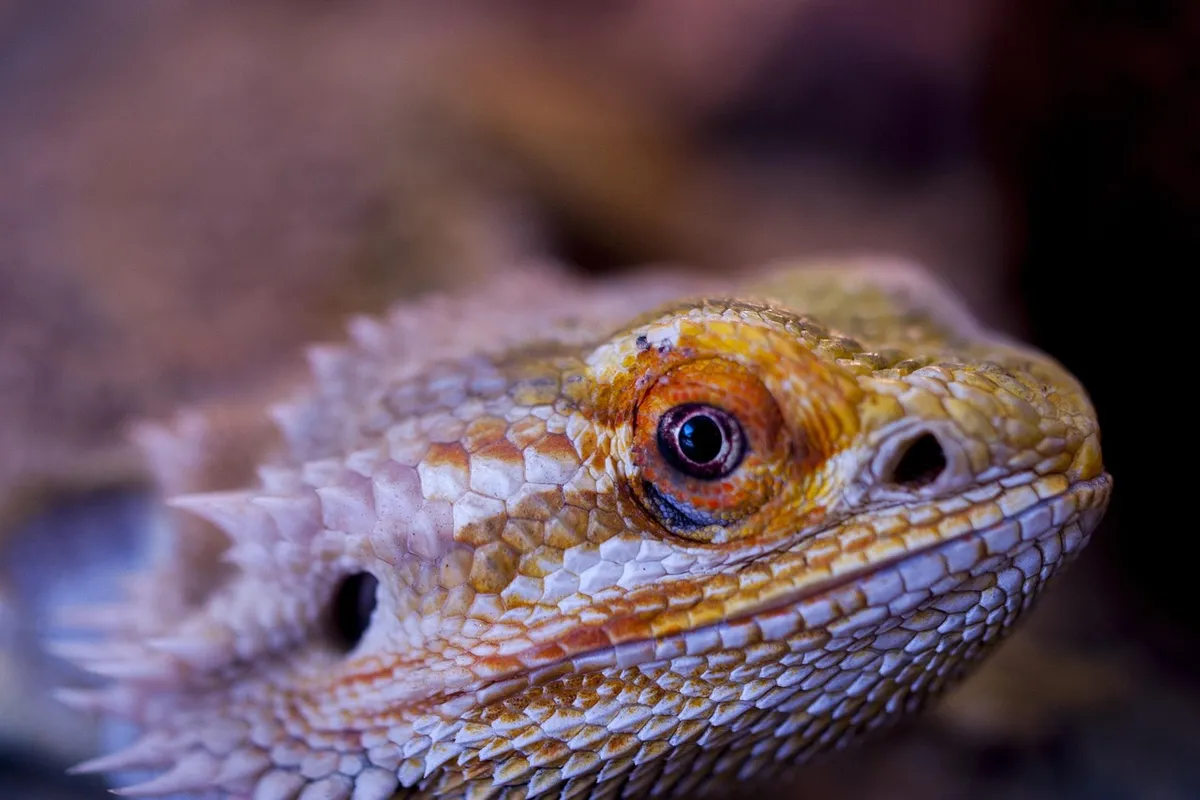
Your bearded dragon will give you clear signals if the humidity is off. Learning to read these signs is a huge part of proactive care. To be thorough, know the 7 critical signs of dehydration to look for in your bearded dragon. Being able to spot them quickly helps you take action sooner.
Signs Your Humidity is Too High
Consistently high humidity creates a breeding ground for bacteria and fungus, leading to serious health issues.
- Respiratory Infections: Listen for wheezing, labored breathing, or a small bubble of mucus at the nostrils. This is a major red flag.
- Skin and Scale Issues: Look for patches of discolored, lifted, or soggy-looking scales. This can develop into scale rot, a painful fungal infection.
- A Constantly Damp Environment: If the glass walls are frequently foggy or the decor feels damp to the touch, the air is too saturated.
- Lethargy and Loss of Appetite: Just like us, they feel sluggish and unwell in a muggy environment.
Signs Your Humidity is Too Low
While less common, arid conditions also cause significant stress and health problems.
- Difficult Shedding (Dysecdysis): The old skin will come off in tiny, tight flakes instead of large pieces. You’ll see retained skin, especially on the toes, tail tip, and spikes.
- Wrinkled or Loose Skin: Your dragon may look a bit deflated or wrinkled, a sign of mild dehydration.
- Sunken Eyes: This is a more serious sign of dehydration that needs immediate attention.
- Dull, Crusty Eyes: Inadequate humidity can prevent the eyes from staying clean and lubricated during shedding.
Frequently Asked Questions
Is a humidity level of 70% at night dangerous for my bearded dragon?
Yes, consistently reaching 70% humidity at night is dangerous and significantly increases the risk of respiratory infections. You should take immediate steps to improve ventilation and reduce moisture sources to bring nighttime levels down to a safer 40-50% range.
How do temperature and humidity work together in the habitat?
Temperature and humidity have an inverse relationship; as the temperature on the warm side increases, the air’s ability to hold moisture decreases, which naturally lowers humidity. This is why the cool side of the tank often has a slightly higher humidity reading than the hot, basking area.
What is the most effective solution for consistently high humidity?
For persistent high humidity, using a small room dehumidifier is the most effective long-term solution. This directly addresses the root cause by pulling excess moisture from the air, especially in naturally humid climates or during certain seasons.
Final Thoughts
Getting your bearded dragon’s humidity right isn’t as complicated as it first seems. The sweet spot is consistently maintaining that 30-40% range, with a brief daily spike up to 50-55% for healthy shedding. From my own experience, a good digital hygrometer and a thoughtful approach to misting and ventilation make all the difference.
Remember, you’re not just controlling numbers on a gauge. You are actively creating a balanced habitat that supports their respiratory health and overall vitality. Pay close attention to your dragon, trust your tools, and you’ll master their environment in no time. For comprehensive care tips, don’t forget to check out this complete beginner’s guide on how to take care of a bearded dragon.
Further Reading & Sources
- r/BeardedDragons on Reddit: What should be the true humidity and temperature?
- What is the Ideal Humidity for a Bearded Dragon, and How Do I Maintain It? | Bearded Dragon Care Q&A
- Bearded Dragon Care Sheet | PetMD
Bearded Dragon Lair is the ultimate resource for bearded dragon enthusiasts, offering expert advice and practical tips to ensure the health and happiness of your scaly companion. With years of experience in reptile care, we are dedicated to providing accurate, up-to-date information to support your bearded dragon journey.
Hydration Needs