
How Smart Are Bearded Dragons? Uncovering Their True Intelligence
You’ve likely watched your bearded dragon and wondered, just how clever is that little scaly friend staring back at you?
Having shared my home with multiple beardies for years, I’ve seen their surprising smarts firsthand, and I’ll help you decode their unique brand of intelligence.
We’ll explore their problem-solving abilities, memory feats, and social cues to give you a complete picture of their cognitive world.
Defining Intelligence in Bearded Dragons
When we talk about a bearded dragon being “smart,” we aren’t looking for an animal that can do calculus. For reptiles, intelligence is all about practical survival skills you can see with your own eyes. It’s their ability to learn from their environment, remember important details, and solve the daily puzzles of their existence. Unlike other lizards, bearded dragons show unique behavior that indicates a certain level of awareness.
Think of their intelligence less like a school test and more like the savvy of a seasoned athlete who knows every inch of their home court.
What Is Reptile Cognition?
Bearded dragons have a brain that, while smaller than a mammal’s, is surprisingly capable. They possess neural plasticity, which is a fancy way of saying their brain can change and form new connections based on experience. This isn’t just theory; I’ve seen it firsthand when a dragon learns a new route to its favorite basking spot after I rearrange the tank. Bearded dragons can hear and respond to sounds, which helps them pick up social cues and communication signals in their environment. Understanding their hearing and communication is an important part of how they interpret and respond to us and other dragons.
Their entire cognitive framework is built for one thing: surviving the harsh Australian outback. Every bit of their brainpower is honed for finding food, avoiding predators, and regulating their body temperature in a challenging landscape.
Key Indicators of Bearded Dragon Intelligence
You don’t need a lab to see your dragon’s brain at work. Just watch for these behaviors. My dragon, Gila, shows me new ones all the time.
- Recognition: They learn to recognize you, their primary food source. My beardies always get more active and attentive when I walk into the room, unlike when a stranger does.
- Curiosity: A smart dragon is an inquisitive one. They’ll actively watch what you’re doing, track movements outside their tank, and investigate new items with their tongue.
- Anticipation: They learn routines. If you always feed them at 5 PM, you’ll likely see them waiting at the front of the enclosure around 4:55 PM.
- Communication: They use specific body language to tell you things, like arm-waving for submission or head bobbing for dominance. They are trying to communicate their state of mind.
- Habit Formation: They develop clear preferences for certain foods, sleeping spots, and even people.
Core Cognitive Skills: Memory and Problem-Solving
This is where the magic really happens. A dragon’s memory is sharper than many people give them credit for, and their problem-solving skills can be downright impressive when motivated.
How Bearded Dragons Use Memory
Bearded dragons rely heavily on spatial memory. They create a mental map of their territory. One of my rescues, Spike, always remembers which rock retains heat the longest and will move there every evening without fail. They also remember feeding locations and times. If you always offer greens from a blue bowl, they will start associating that blue bowl with food. If a bearded dragon isn’t active, start by checking enclosure heat, UVB lighting, and space for movement, then add enrichment or supervised exercise. If inactivity persists, consult a reptile veterinarian.
You can test your dragon’s memory with simple cue discrimination tasks at home.
- Use two different colored cups (e.g., red and yellow).
- Always place a tasty worm under the red cup and leave the yellow one empty.
- After several repetitions, present both cups and see if your dragon goes directly to the red one. Many will learn the association quickly.
Problem-Solving in Action
Behavioral flexibility is a key sign of intelligence. I once saw a younger dragon figure out how to climb on a hide to reach a branch that was just a little too high, showing a clear A-to-B-to-C thought process. They can figure out simple latches or how to nudge a sliding door open if it’s not secured.
Stimulating this skill is crucial for their well-being and prevents boredom. Try these DIY puzzles:
- The Toilet Paper Roll Puzzle: Fold the ends of an empty roll, put some bugs inside, and watch them figure out how to get them out.
- The Dig Box: Fill a shallow container with organic soil or reptile-safe sand and hide some worms for them to forage.
- Obstacle Course: Use tank-safe items to create a small maze they must navigate to reach a food reward.
Learning and Training: How Bearded Dragons Acquire Skills
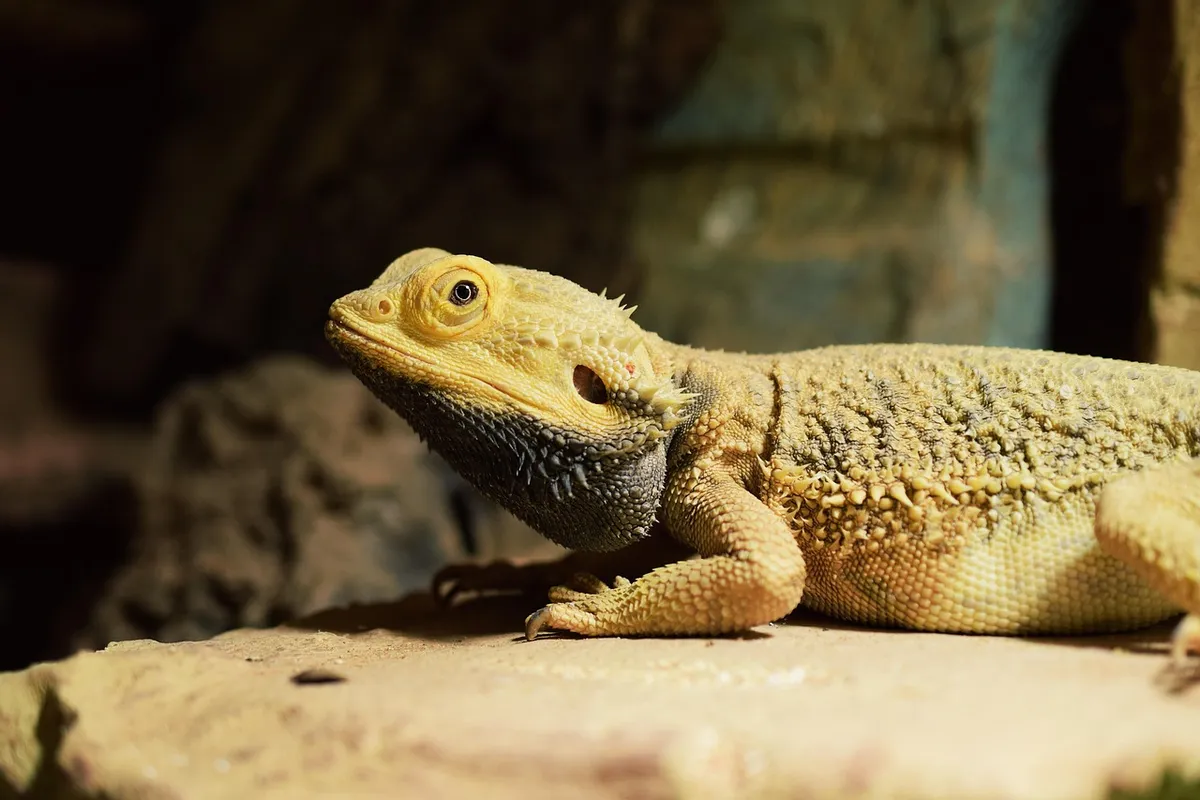
Watching a bearded dragon learn is one of the most rewarding parts of being an owner. Their ability to pick up on patterns and associate actions with outcomes is the foundation of all training. It’s not about complex commands, but about clear, consistent communication. To get your bearded dragon to like you and build trust, pair gentle handling with positive reinforcement and calm routines.
Associative Learning and Conditioning
In simple terms, associative learning means your dragon connects a specific action with a specific result. If the result is good, they’re more likely to do the action again. This is why a high-value treat, given immediately, is your most powerful training tool. The timing is everything.
- Effective Treats: Small pieces of raspberry, blueberry, hornworm, or waxworm. These should be special, not part of their daily salad.
- Timing for Sessions: Keep sessions short, 5-10 minutes, and always end on a positive note. I find the best time is when they are alert, usually in the late morning or early afternoon.
Social Learning and Observation
While not pack animals like dogs, bearded dragons are observant. One of my dragons learned to come to the front of the tank when he hears the salad container simply by watching his neighbor get fed first every day. This observational learning is a form of social intelligence that helps them thrive in a human-centric environment. From an ethology standpoint, their captive behaviors show a clear adaptation to our routines.
Comparing Bearded Dragon Intelligence to Other Reptiles
It’s fascinating to see how different reptiles use their smarts. Bearded dragons often stand out for their behavioral flexibility and willingness to interact with their environment in ways other reptiles might not. They are curious by nature, which drives their learning. For beginners wondering if bearded dragons are good pets, their calm demeanor and easy handling stand out. This complete guide will walk you through everything you need to know to get started.
| Species | Problem-Solving | Memory | Social Cues |
|---|---|---|---|
| Bearded Dragon | Moderate; can learn simple puzzles | Strong; remembers people and routines | Recognizes owner; may learn by observation |
| Leopard Gecko | Basic; learns feeding locations | Good; remembers hide spots | Minimal; primarily solitary |
| Ball Python | Low; relies on instinct and scent | Basic; remembers secure hides | Very minimal |
| Red-Eared Slider Turtle | Moderate; can learn feeding routines | Excellent; remembers complex paths | Recognizes feeder |
Bearded Dragons vs. Other Lizards
Having kept various lizards, I’ve noticed a distinct difference in problem-solving initiative. While a crested gecko might be more agile, a bearded dragon is often more determined to figure out a new obstacle. They seem to actively test their surroundings, whereas many other lizards are more reactive. This makes their learning speed for simple tasks like target training noticeably quicker.
Intelligence in Snakes and Turtles
Snakes operate on a different wavelength, their intelligence is deeply tied to scent and thermal detection. A bearded dragon’s memory for visual landmarks and human faces seems far more developed than that of a typical snake. Turtles, on the other hand, possess remarkable spatial memory. The key takeaway is that intelligence isn’t a single ladder. Every reptile has a mind perfectly adapted for its own unique ecological niche and survival strategy.
Recognizing Signs of Intelligence in Your Pet
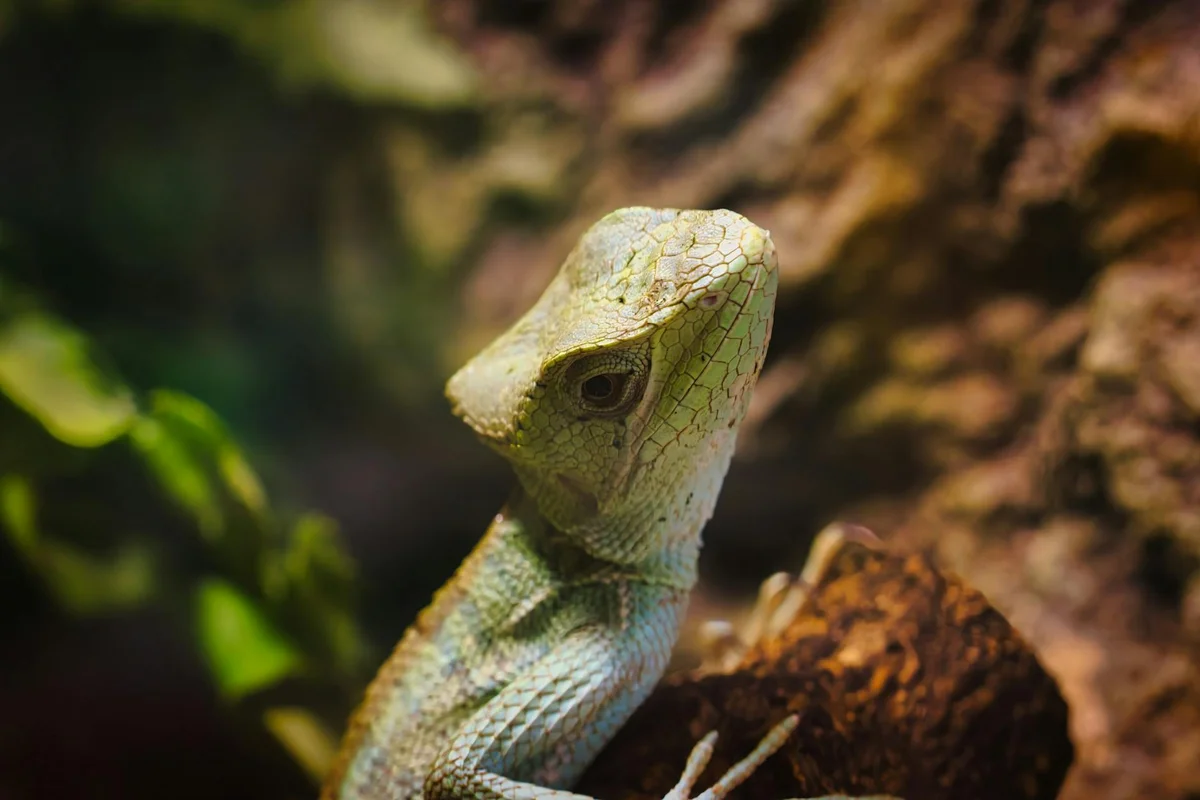
You don’t need a complex IQ test to see your bearded dragon’s brainpower in action. Their intelligence is often displayed through subtle, everyday behaviors that are easy to miss if you’re not looking for them. I’ve spent years observing my own dragons, and their individual personalities and smarts constantly surprise me.
Behavioral Cues of a Smart Beardie
Watch for these actions that suggest a sharp, engaged mind:
- Name Recognition: They may not come like a dog, but many will turn their head, pause, or look at you when you say their name.
- Active Exploration: A curious dragon constantly investigates its enclosure and, during safe out-of-tank time, explores new areas.
- Anticipating Routines: They get excited or move to a specific spot when they see you preparing their food or getting their leash.
- Purposeful Communication: Beyond basic arm-waving, they may nudge your hand for attention or scratch at the glass to signal a specific desire, like wanting out.
Interpreting Their Body Language
Learning to “speak dragon” is key to understanding their cognitive abilities. A slow, deliberate head bob can be a confident assertion of presence. That intense, focused stare they give you isn’t just a blank look; they are processing information and learning your patterns. When they flatten their body (pancaking) in a basking spot, it’s a smart thermoregulation behavior, not just lounging.
Your Dragon’s Intelligence Checklist
See how many of these cognitive milestones your pet has hit:
- Responds to the sight of their food container.
- Recognizes you differently from other people.
- Learns the layout of your room and navigates it during free-roam time.
- Shows problem-solving skills, like figuring out how to climb onto a favorite rock.
- Displays different behaviors for different needs (e.g., glass surfing for attention vs. scratching at a hide to be let in).
Everyday Smart Behaviors
Their cleverness shines brightest in daily care routines. One of my dragons, Ember, always goes to her feeding ledge the moment she hears the fridge door open where her greens are kept. This anticipation of feeding time shows memory and the ability to connect sounds with outcomes. They also use their excellent vision to track moving objects and their strong sense of spatial awareness to avoid falling from furniture, a clear sign of environmental intelligence.
When Intelligence Shows in Challenges
Sometimes, their problem-solving skills can be a little too effective. I’ve heard countless stories of dragons figuring out simple cage latches or stacking hides to create an escape route. If your dragon is a Houdini, it’s not just mischief; it’s evidence of advanced spatial reasoning. Instead of getting frustrated, channel this intelligence. Use positive reinforcement with their favorite treats to reward them for solving simple puzzles you create, like a paper towel roll with a worm inside. This encourages their cleverness in a safe, controlled way.
Enrichment for Cognitive Development

A mentally stimulated bearded dragon is a happy and healthy one. Providing cognitive enrichment is a non-negotiable part of ethical reptile care, preventing stress and promoting natural behaviors. In the wild, their days are spent foraging, exploring, and solving problems; we must replicate that in our homes. Bearded dragon enrichment ideas can help translate this into daily care. Try simple activities that promote foraging and exploration.
Here is a list of enrichment ideas to get you started:
- Puzzle Feeders: Use a commercial reptile puzzle feeder or make your own by hiding worms under a cup they have to nudge aside.
- Habitat Rearrangement: Every few weeks, safely change the layout of their enclosure. Move rocks, branches, and hides to create a “new” world to explore.
- Novel Textures: Introduce new, safe items with different textures, like a flat stone, a piece of sandblasted grapewood, or a rough tile.
- Supervised Exploration: Create a secure, beardie-proofed area outside their tank for daily supervised adventures.
Steps to Safely Introduce New Enrichment
- Start simple with one new item or activity at a time.
- Place the new item near the edge of the enclosure, not in the center, to avoid overwhelming them.
- Observe their body language. A curious approach is good; hiding or turning black indicates stress.
- If they seem stressed, remove the item and try again in a few days. Never force interaction.
DIY Enrichment Ideas
You don’t need a big budget to boost your dragon’s brain. My dragons love a simple “dig box” made from a shallow tub filled with organic soil or flax seed. They spend hours digging and rearranging it. Another easy project is a “salad kabob”-skewer various greens and safe flowers onto a stainless steel skewer and hang it in the tank, encouraging them to work for their food. Variety is critical; rotate these DIY projects to keep their environment novel and engaging.
Identifying and Addressing Boredom
A bored bearded dragon can develop stress-related behaviors. Watch for these warning signs:
- Glass Surfing: Frantically scratching at the tank walls repeatedly.
- Lethargy: A general lack of interest in surroundings, food, or exploration.
- Repetitive Pacing: Walking the same path over and over again.
- Loss of Appetite: When not linked to illness or brumation.
If you see these signs, it’s a clear signal that their cognitive needs are not being met. The solution is to immediately increase their mental stimulation. Add a new climbing branch, introduce a new feeding strategy, or increase their out-of-tank exploration time. Paying attention to their mental health is just as important as monitoring their physical health.
Frequently Asked Questions
How does a bearded dragon’s intelligence compare to a dog or cat?
Bearded dragons exhibit a different kind of intelligence, focused on spatial memory and environmental problem-solving for survival, rather than the social pack mentality of dogs or the predatory curiosity of cats. They are highly adept at learning routines and recognizing their owners, but their cognitive abilities are specialized for their specific ecological niche. These observations raise a question: do bearded dragons bond with owners? Their recognition may resemble attachment, though it differs from mammalian bonds.
Can you actually train a bearded dragon to do tricks?
Yes, through positive reinforcement and short, consistent training sessions, you can train a bearded dragon to perform simple actions like target touching. Their ability to associate an action with a high-value food reward is the foundation for this type of learning. This same method can be applied to potty training and other fun tricks, turning daily care into engaging, rewarding sessions.
What are the signs of a bored bearded dragon?
Signs of boredom include repetitive glass surfing, lethargy, constant pacing, and a loss of appetite not linked to illness. These behaviors indicate a need for more mental stimulation through habitat enrichment, puzzle feeders, and supervised exploration.
Final Thoughts
So, how smart are bearded dragons? They aren’t going to solve complex puzzles, but their intelligence is perfectly suited for their world. They are masters of problem-solving for things that matter to them, like finding food and learning to trust you. Their cognitive abilities are a fascinating blend of instinct and learned behavior, just like understanding the basics of bearded dragons themselves.
My biggest piece of advice is to pay close attention and interact with your dragon every day. You’ll be amazed at the unique personality and clever little habits your scaly friend will reveal over time. The more you engage their mind with positive interactions, the more their intelligence will shine through.
Further Reading & Sources
- How Smart Are Bearded Dragons? Everything We Know About Their Intelligence – A-Z Animals
- r/BeardedDragons on Reddit: How smart are bearded dragons?
- “Intelligence of Bearded Dragons” by sydney herndon
Bearded Dragon Lair is the ultimate resource for bearded dragon enthusiasts, offering expert advice and practical tips to ensure the health and happiness of your scaly companion. With years of experience in reptile care, we are dedicated to providing accurate, up-to-date information to support your bearded dragon journey.
Training Games