
Can Bearded Dragons See in the Dark? A Guide to Their Vision
If you’ve ever peeked into your bearded dragon’s tank at night and wondered what they can actually see, you’re asking the right question.
As someone who has cared for multiple beardies for years, I’ve learned to see the world through their eyes to provide the best care possible.
We’ll cover how their vision works in low light, what colors they see best, and how to set up their home for optimal comfort and health.
Do Bearded Dragons Have Night Vision?
No, bearded dragons cannot see in the dark. Their vision is not built for navigating in complete darkness. As a diurnal species, they are biologically wired to be active during the day and sleep when it’s dark. I’ve noticed with my own dragons that once the sun goes down, they find their favorite sleeping spot and are out for the count, showing no interest in moving around their enclosure. This is why it’s important to provide appropriate lighting and temperature management for their nighttime care, as outlined in this guide.
The science behind this comes down to the photoreceptors in their eyes. Eyes have two main types of these light-sensitive cells:
- Rods: These are for low-light and peripheral vision. Nocturnal animals have loads of them.
- Cones: These are for color vision and detail in bright light. Bearded dragons have a high concentration of cones.
Bulging, sunken, or swollen eyes in bearded dragons can signal health problems beyond vision, such as dehydration or infection. If you notice these symptoms, consult a reptile-savvy veterinarian promptly.
Since beardies are sun-lovers, their eyes are packed with cones to help them spot movement and vibrant colors in daylight. They simply don’t have enough rod cells to create a clear picture in the dark. Their world becomes a blurry, indistinct shadow once the lights go out.
This is a stark contrast to animals that are true masters of the night. Nocturnal hunters like cats or geckos possess a special reflective layer behind their retina called the tapetum lucidum. This layer acts like a mirror, bouncing available light back through the retina to give them a second chance to see it. That’s why their eyes seem to glow in the dark, and it’s a feature bearded dragons completely lack. If you notice your bearded dragon closing one eye or squinting, that’s usually due to eye irritation or injury rather than night vision. In such cases, a vet visit is advised if the behavior persists.
Bearded Dragon Eye Anatomy and Function
Understanding their eye structure makes it clear why they are daytime specialists. Here’s a breakdown of the key parts that make their vision unique.
Key Eye Components
- Retina: The light-sensitive layer at the back of the eye. It’s where all those cones (for color) and fewer rods (for low light) are located.
- Pupil: The black opening that controls how much light enters the eye. It isn’t a perfect circle like ours but has a notched, irregular shape.
- Nictitating Membrane: This is a super cool feature! It’s a transparent or semi-transparent third eyelid that sweeps horizontally across the eye. I see my dragons use it all the time to moisten their eyes or protect them while digging without fully closing their eyelids.
Their pupils are incredibly dynamic. In bright light, the pupil contracts into a narrow, vertical slit to limit light intake and protect the sensitive retina. When it gets dimmer, the pupil will dilate and become large and round to let in every possible bit of available light. Even when fully dilated, however, there just isn’t enough light-processing equipment inside to form a proper image in pitch blackness.
The Mysterious Parietal Eye
Perhaps the most fascinating part of their anatomy isn’t one of their two main eyes. On the top of their head, you’ll find a small, grayish dot scale. This is the parietal eye, often called their “third eye.”
This isn’t a true eye that forms images; instead, it acts as a sophisticated light sensor. It’s directly linked to their pineal gland, which regulates their daily cycles and hormone production. The parietal eye primarily detects changes in light and shadow. From my experience, this is why they often flinch or duck if you suddenly pass your hand over their head from above-their third eye has just detected a potential predator. This incredible organ helps them sense the time of day and is crucial for regulating their basking, feeding, and sleeping schedules.
| Eye Part | Primary Function |
|---|---|
| Retina | Processes light and color via cone cells; has limited rod cells for low light. |
| Pupil | Regulates light intake; dilates in dim light, contracts to a slit in bright light. |
| Nictitating Membrane | Protects and moistens the eye while allowing some vision. |
| Parietal Eye (Third Eye) | Detects light/shadow changes and regulates circadian rhythms; does not form images. |
How Bearded Dragons Perceive Their World
Watching my dragons, I’m always struck by how differently they must see the room compared to me. Their vision is a specialized toolkit, perfectly adapted for life in the Australian outback.
An Explosion of Color
Bearded dragons are tetrachromats, meaning they have four types of color receptors in their eyes. We humans only have three. This allows them to see a broader spectrum of color, including into the UVA range, which is completely invisible to us. They seem particularly tuned in to blues and greens, which probably helps them identify fresh, edible vegetation. What colors do they actually see? Blues and greens stand out most to them, and they also perceive ultraviolet patterns that guide them in the world around them.
The Critical Superpower: UV Vision
This isn’t just a neat trick; it’s a matter of health and communication. Their ability to see UV light is deeply integrated into their daily life.
- Appetite Regulation: I’ve noticed my dragons are more active and eager to hunt under their UVB lamp. This light helps them synthesize Vitamin D3, which in turn allows them to absorb calcium. Without seeing adequate UVB, their bodies don’t get the signal to be hungry or properly metabolize their food.
- Social Signaling: They use UVA patterns on each other’s bodies to communicate. A rival’s beard might look very different in the UVA spectrum, conveying a stronger threat.
Beard color and body hue also carry messages; shifts in shade can reflect mood, stress, or health. Learning what these colors typically mean, as explained in bearded dragon color meanings, helps you read what your dragon needs beyond just UV cues.
Masterful Motion Detection
If a cricket so much as twitches across the room, my beardies’ heads snap to attention. Their eyes are exceptionally good at detecting even the slightest movement, a crucial skill for a predator that hunts fast-moving insects. This same ability helps them spot aerial predators like hawks from a distance, giving them time to flee or freeze.
Depth Perception and Acuity Limitations
Their eyes are positioned on the sides of their head, giving them a massive field of view to watch for danger. The trade-off is a smaller area of binocular vision right in front of their nose. This is why you might see your dragon cock its head from side to side; it’s triangulating to get a better sense of distance before it strikes at food. Their visual acuity isn’t as sharp as ours, so they live in a world of generalized shapes and brilliant motion.
Vision in Darkness and Low Light
So, can they actually see in the dark? The straightforward answer is no, not like a cat or an owl can.
What “Seeing in the Dark” Really Means for Them
Bearded dragons have a high number of rod cells in their retinas, which are the photoreceptors responsible for low-light vision. This means they can see better than we can in very dim conditions, like during dusk or dawn, but they are essentially blind in total, pitch-black darkness. Their world fades to black when the lights go out completely. Bearded dragons also have a parietal, or third eye, on top of their head. It does not form images but helps detect light changes to regulate daily rhythms.
Tied to the Sun’s Rhythm
Their vision is perfectly synced with their circadian rhythm. In the wild, they are considered diurnal, meaning they are active during the day. They are also somewhat crepuscular, meaning you’ll often see a burst of activity during the twilight hours of dawn and dusk. This is when their specialized vision gives them a slight edge.
Navigating a Dark Terrarium
When the lights go off in their enclosure, they don’t just stumble around blindly. They rely heavily on memory and other senses to navigate their home turf. I’ve watched my dragons use their whisker-like sensory organs along their jaw and their sense of touch to feel the boundaries of their branches and hides. They remember the layout of their territory.
Nighttime Behavior in Captivity
In a proper captive setup, nighttime should be for sleeping. You should observe your dragon finding a favorite, secure spot and settling in for the night.
- You might see them shift around slightly to get comfortable.
- Their breathing will slow down.
- They should not be pacing, glass surfing, or trying to climb the walls once the lights are off.
If your dragon is active at night, it’s often a sign that something is wrong, like the temperature is too high or there is a disruptive light source causing them stress. A dark, quiet, and cool night is what they need for proper rest.
Common Bearded Dragon Vision Problems
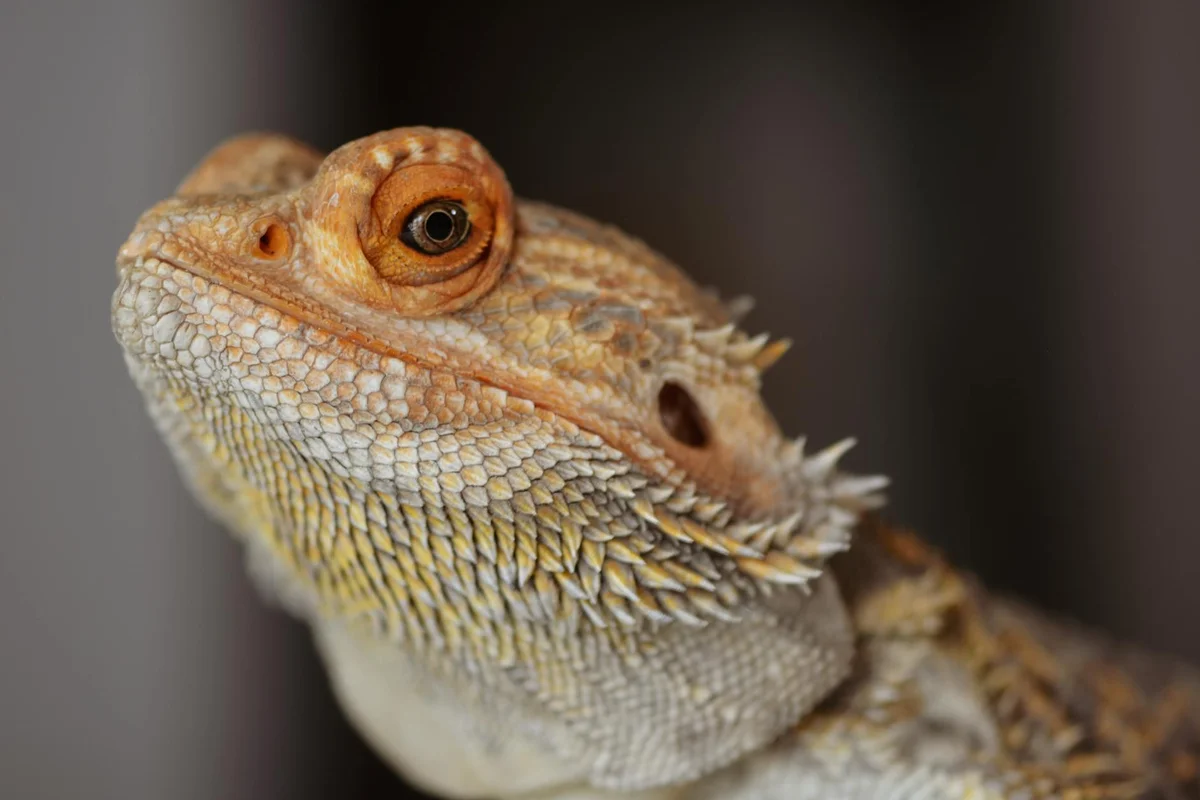
Over the years with my own dragons, I’ve learned that their eyes are incredibly expressive windows into their overall health. Spotting a vision problem early can make all the difference in a quick and successful recovery. Keep a close watch for these tell-tale signs.
Signs of Poor Eye Health
- Swelling or puffiness around one or both eyes.
- A sticky, stringy, or crusty discharge.
- Cloudy, milky, or hazy-looking eyes.
- Keeping the eye closed for long periods.
- Frequent rubbing of the eye on decor or the substrate.
- An inability to track or focus on moving food.
Common Vision Issues Explained
Many eye problems stem from a few key areas. Understanding the root cause is your first step toward helping your pet feel better.
- Infections: Bacterial or fungal infections can cause swelling and discharge. These often need prescription medication from a vet to clear up.
- Vitamin A Deficiency: This is a big one. A lack of vitamin A damages the lining of the eye and can lead to swelling and difficulty fighting off infection. A balanced diet with proper supplements is the best prevention.
- Shedding Complications: Sometimes, pieces of old skin get stuck around the eyelid, causing irritation and preventing the eye from opening properly. A warm bath can often help loosen this retained shed.
- Injury: A sharp piece of decor or a scratch from a live feeder insect can cause a corneal abrasion. These are very painful and require immediate veterinary attention.
How to Perform a Basic At-Home Eye Check
I make it a habit to do a quick health check on my dragons every week during handling time. A simple, calm examination can help you catch issues before they become severe. Follow these steps.
- Wash your hands thoroughly.
- Gently hold your dragon in one hand, supporting its body.
- In a well-lit room, look at both eyes. They should be clear, bright, and of equal size.
- Check for any discharge, redness, or visible debris.
- See if your dragon will track your finger moving slowly side-to-side in front of its face.
When to Call the Veterinarian
While some minor irritation can resolve on its own, don’t hesitate to seek professional help. Eye issues can deteriorate quickly, and pain is a serious welfare concern. You should schedule a vet visit if you notice any of the following.
- Significant swelling that doesn’t go down in a day.
- Pus-like or bloody discharge.
- The eye is completely closed for more than 24 hours.
- Visible injury to the eyeball itself.
- Your dragon stops eating entirely.
Optimal Enclosure Lighting for Healthy Vision
Getting the lighting right in your dragon’s home is non-negotiable. Proper lighting does more than just keep them warm; it directly fuels their biological processes, including their vision health. A poorly lit tank can lead to a host of problems.
The Perfect Day and Night Cycle
Bearded dragons thrive on routine. Mimicking the natural rise and set of the sun helps regulate their sleep, digestion, and overall well-being. Bearded dragons are diurnal, not nocturnal, so their sleep follows the day-night cycle. This complete guide to their sleep behavior will help you optimize rest and activity. I use a simple timer for all my enclosures to keep things consistent.
- Provide 12-14 hours of light during the day.
- Allow for 10-12 hours of complete darkness and quiet at night.
- This cycle supports their circadian rhythm, ensuring they get the rest they need.
Comparing Bulb Types: A Quick Guide
Not all bulbs are created equal, and using the wrong one can be harmful. Your dragon’s setup needs two main types of bulbs to truly thrive.
- Basking Lights: These are incandescent or halogen bulbs that provide heat and a bright, white light. They create a sun-like spot for your dragon to warm up under.
- UVB Lights: This is the most critical bulb for long-term health. T5 or T8 fluorescent tube bulbs are best. UVB light allows your dragon to synthesize vitamin D3, which is essential for absorbing calcium. Without it, they can develop metabolic bone disease, which weakens bones and can affect the bones around the eyes.
- Night Lights: I strongly advise against any colored “night lights” like red or blue bulbs. Bearded dragons can see these colors, and the light will disrupt their sleep cycle. If your home gets too cold at night, use a ceramic heat emitter which produces heat without any light.
Setting Up a Vision-Friendly Habitat
Follow these steps to create an enclosure that supports your dragon’s eyesight without causing stress.
- Place the UVB tube light so it spans about 2/3 of the enclosure’s length, positioned next to the basking light.
- Ensure the basking spot is within the effective range of the UVB bulb (check the manufacturer’s distance guidelines).
- Create a designated “dark zone” on the cool side of the tank with hides or plants where your dragon can escape the light if needed.
- Avoid placing the tank in direct, harsh sunlight, as this can overheat it and cause retinal damage.
- Always use a thermostat with your heat sources to prevent burns.
The Long-Term Impact of Improper Lighting
Getting the lighting wrong has serious consequences. Chronic poor lighting doesn’t just cause immediate stress; it leads to irreversible health declines.
- Lack of UVB causes Metabolic Bone Disease (MBD), leading to softened jaw bones and skull deformities that can press on the eyes.
- Constant exposure to light, especially at night, causes chronic stress, weakens the immune system, and can lead to vision deterioration over time.
- An enclosure that is too dim can contribute to lethargy and a reduced appetite, as your dragon’s natural instincts aren’t triggered.
Frequently Asked Questions
Can bearded dragons see infrared light?
No, bearded dragons cannot see infrared light; their vision is specialized for detecting UV light and colors in the visible spectrum, not heat signatures. That’s why a proper lighting setup should include a UVB lamp to support vitamin D3 synthesis and a separate heat lamp for a basking spot. Maintain a consistent daily light cycle, typically around 12 hours of light followed by 12 hours of darkness, to support their circadian rhythms.
How often should I replace my bearded dragon’s UVB bulb?
UVB bulbs should be replaced every 6 to 12 months, as their ultraviolet output diminishes over time, even if the bulb still emits visible light.
Can bearded dragons recognize their owners?
Yes, bearded dragons can recognize their owners through visual cues and repeated interactions, often responding with calm behavior or excitement during feeding times. This recognition can indicate a growing bond, and with regular, gentle handling, many owners notice that bearded dragons bond with owners more strongly.
Final Thoughts
So, can bearded dragons see in the dark? Not in the way we might imagine. They see a dim, grayscale world at night and rely on other senses, like their keen perception of vibrations, to navigate. From my own experience, watching my dragons settle down for the evening, this understanding has completely shaped how I set up their habitat—it’s especially important since bearded dragons don’t rely heavily on sound.
The most vital takeaway is to provide a proper day and night cycle without any lights, allowing for a natural temperature drop. Skip the colored “night” bulbs, trust their instincts, and you’ll have a much happier, healthier reptile companion. It’s all about working with their unique biology, not against it.
Further Reading & Sources
- Can Bearded Dragons See in the Dark? – Talis Us
- Yes, Bearded Dragons Have a Third Eye! Here Are The Facts – Dragon’s Diet
- Can Bearded Dragons See In The Dark? A Detailed Look – Berry Patch Farms
Bearded Dragon Lair is the ultimate resource for bearded dragon enthusiasts, offering expert advice and practical tips to ensure the health and happiness of your scaly companion. With years of experience in reptile care, we are dedicated to providing accurate, up-to-date information to support your bearded dragon journey.
Heating and Lighting